

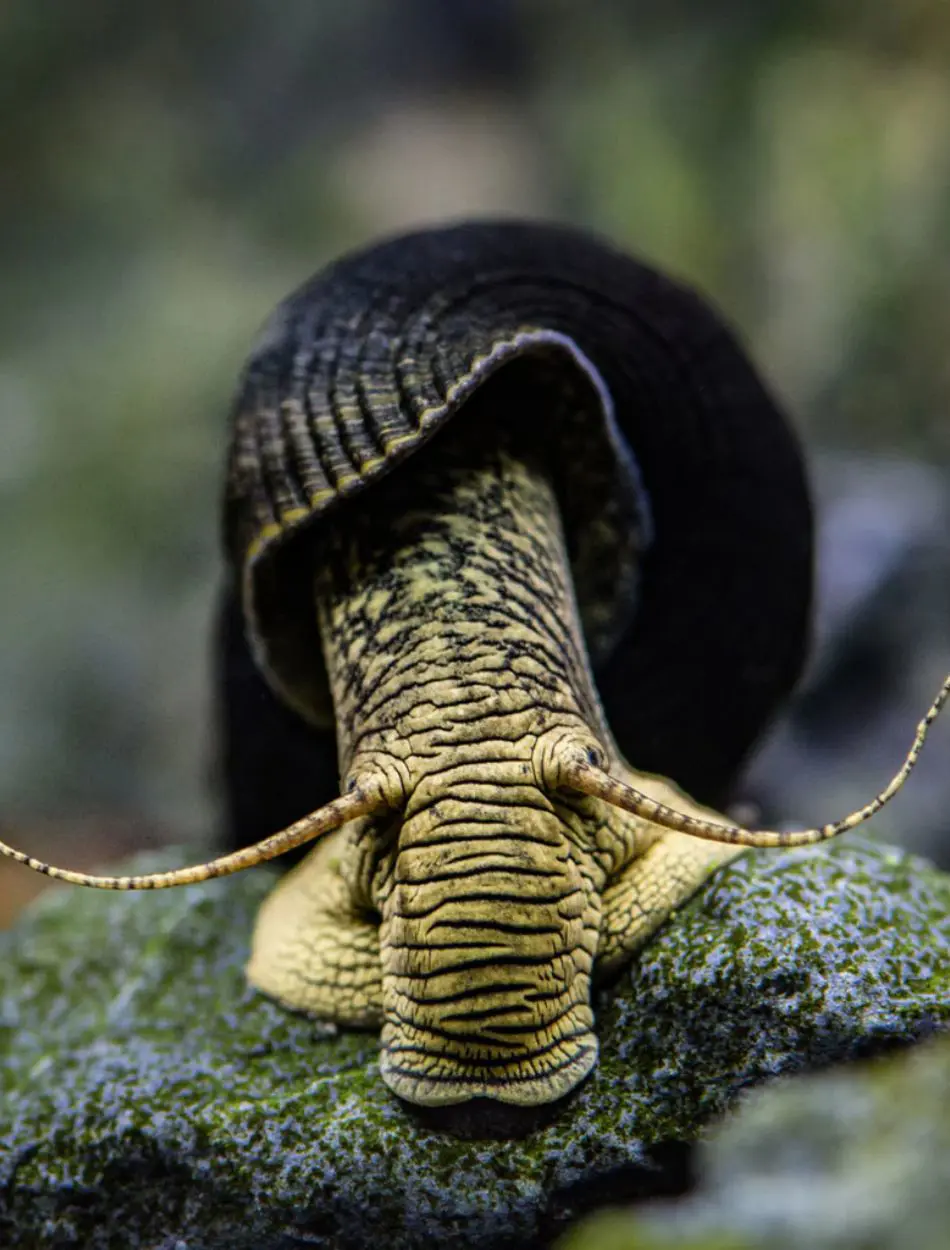
When it comes down to rabbit snails, this mysterious and one-of-a-kind creature has quickly become a fan favorite in the aquarium hobby. These mollusks are conspicuous for their bright colors, elongated spiral shells, and slow deliberate manner of movement.
Here is an in-depth guide to rabbit snail care, starting with how you should build the perfect tank for them, what food they feed on, ideal water parameters; breeding nature or other types of fish that can coexist with and many others.
Rabbit Snail Diet And Feeding
Rabbit snails are no different than others, so it is imperative to feed them a good diet. These snails are omnivores in nature and thus, they feed on plants as well as protein-based food.
Primary Diet
In the wild, rabbit snails are eaters of biofilm and algae as well as decaying plant material.
For best care in an aquarium, make sure their diet is supplemented with high-quality algae wafers, sinking pellets, and blanched veggies like zucchini, spinach, and cucumbers.
Unconsumed food has to be removed or the water will foul.
Calcium Supplementation
Shells are necessary for the calcium inside of their shells for snails. Providing calcium can help protect the shell from erosion and other issues, so be sure your baby is given room available containing cuttlebones, crushed eggshells, or specialized commercial sources of supplementary reptile orders.
Many aquarists will also dose liquid calcium supplements right into the water column to support shell development.
Feeding Frequency
Feeding it is only once a day for these rabbit snails. Give them enough food to last a few hours. Excess Feeding will lead to poor water and health issues. By observing your snail's feeding habits, you will have an idea of how much and the regularity.
Setting Up The Ideal Rabbit Snail Tank
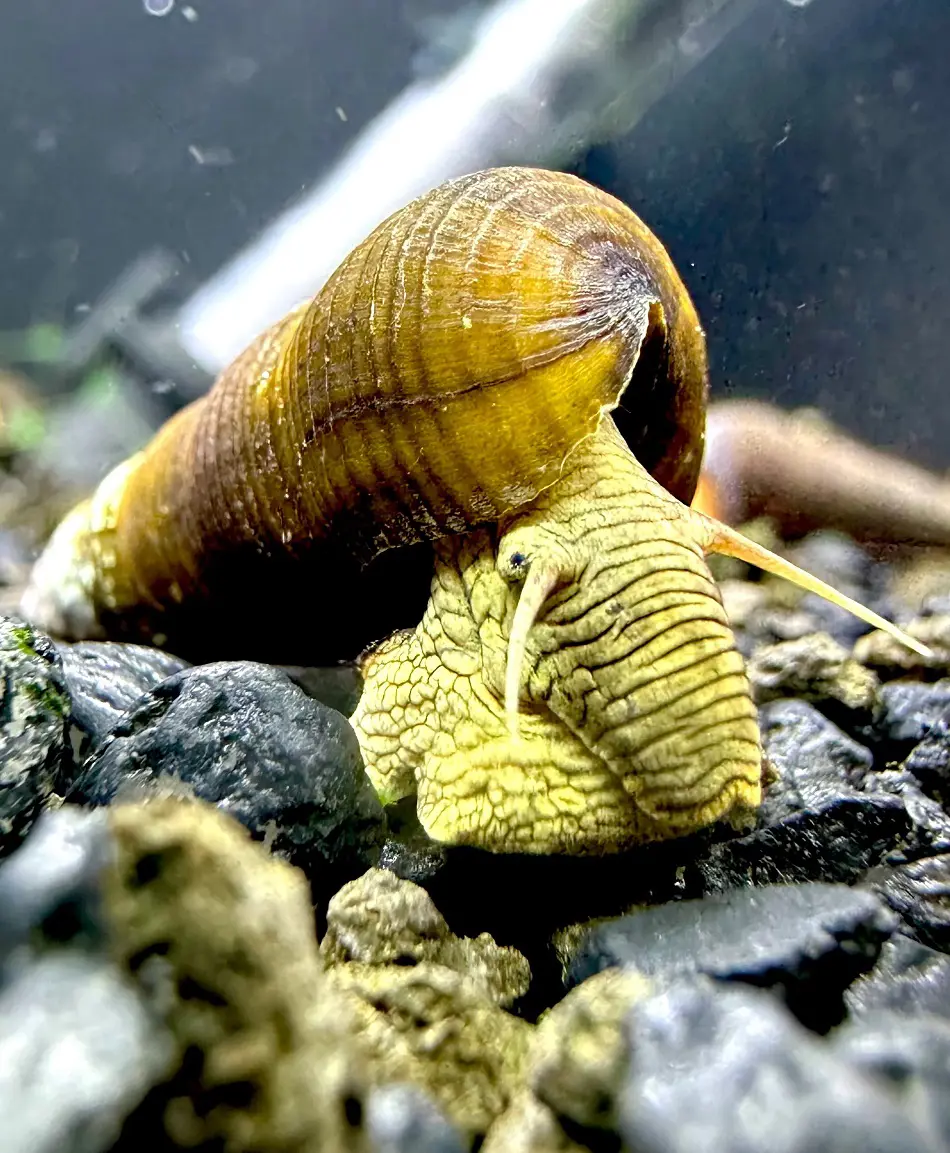
Because rabbit snails do not thrive in all types of habitats, making sure that your aquarium environment fits the needs of these creatures is very important. The following must be considered :
Tank Size
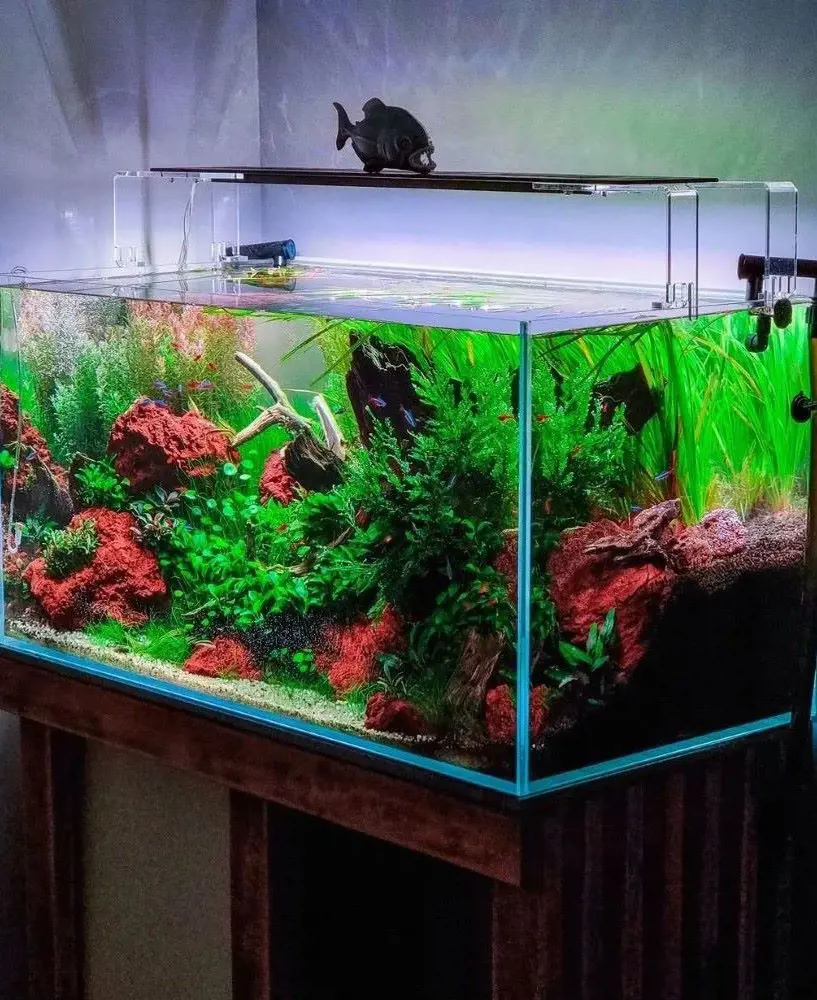
Rabbit snails like to have a lot of room in which they can roam around and feed. The tank that they suggest is at least 20 gallons for a few rabbit snails. If you want to have more than that, avoid overstocking by buying a bigger tank for them adequate swimming room.
Substrates and Decorations
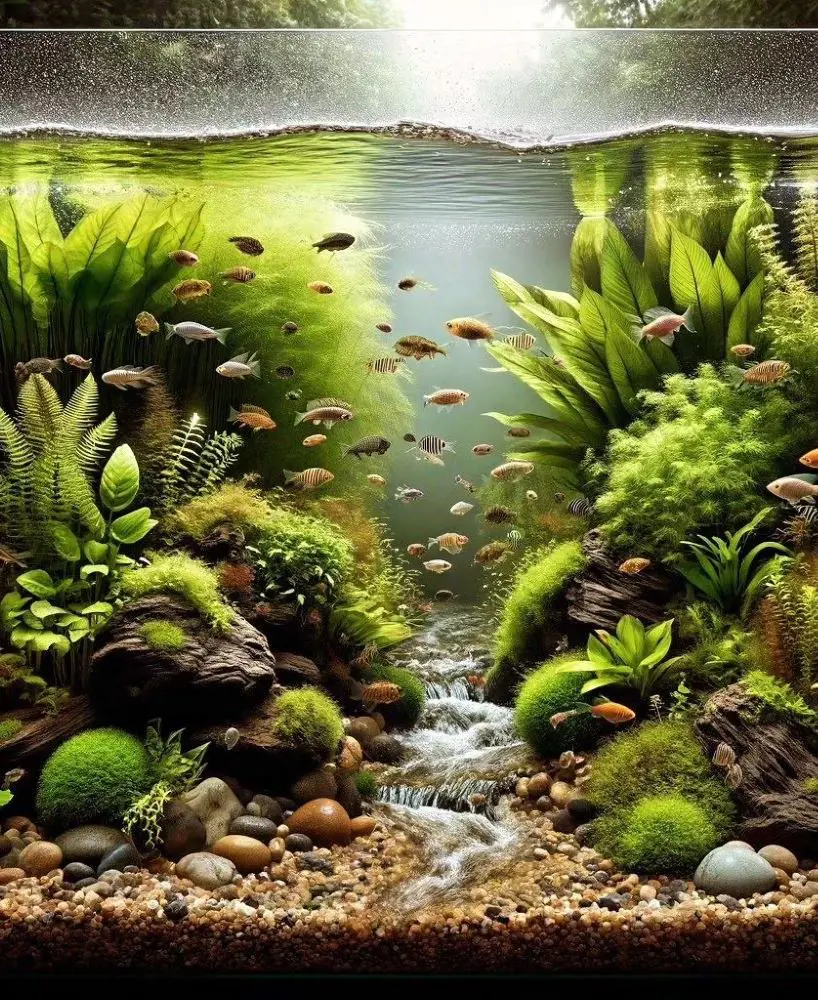
The substrate is very important in the care of rabbit snails. The best is a bottom cover of fine sand or small gravel that resembles their natural habitat, thus reducing the shell injury.
Also, rocks (such as lace or dragon stone), driftwood, and plants such as java ferns or Anubias may provide hiding places in addition to making the tank appear more natural.
Rabbit snails are also rather enthusiastic diggers, if you have any sort of decoration in your tank, rabbit snails will happily move them around for you. So be sure to choose a decoration that won't be easily moved.
Water Parameters
It is important to keep the water conditions stable for rabbit snails. Although the ideal pH for them is 7.4 to 8.2, they can be kept in slightly alkaline water as well.
The tank temperature should be maintained between 76°F and 84° (24°C to 29 C), which is warmer than necessary for some other freshwater animals. Water hardness should be from moderate to high because this helps develop strong shells.
Proper water conditions for a mystery snail mean that you should monitor your water levels and treat them accordingly so the parameters do not fluctuate enough to harm any of your snails.
Filtration and Water Quality
Although rabbits and snails do not produce as much waste as some other aquatic animals, it is always necessary to have good filtration for them to remain healthy and have clean water.
Choose a gentle filter that does not produce more currents, as rabbit snails prefer slower-moving water. Frequent (every 2 weeks) partial (~20-30%) water changes can be useful in maintaining good water quality and keeping ammonia and nitrite levels low.
Behavior Of Rabbit Snails
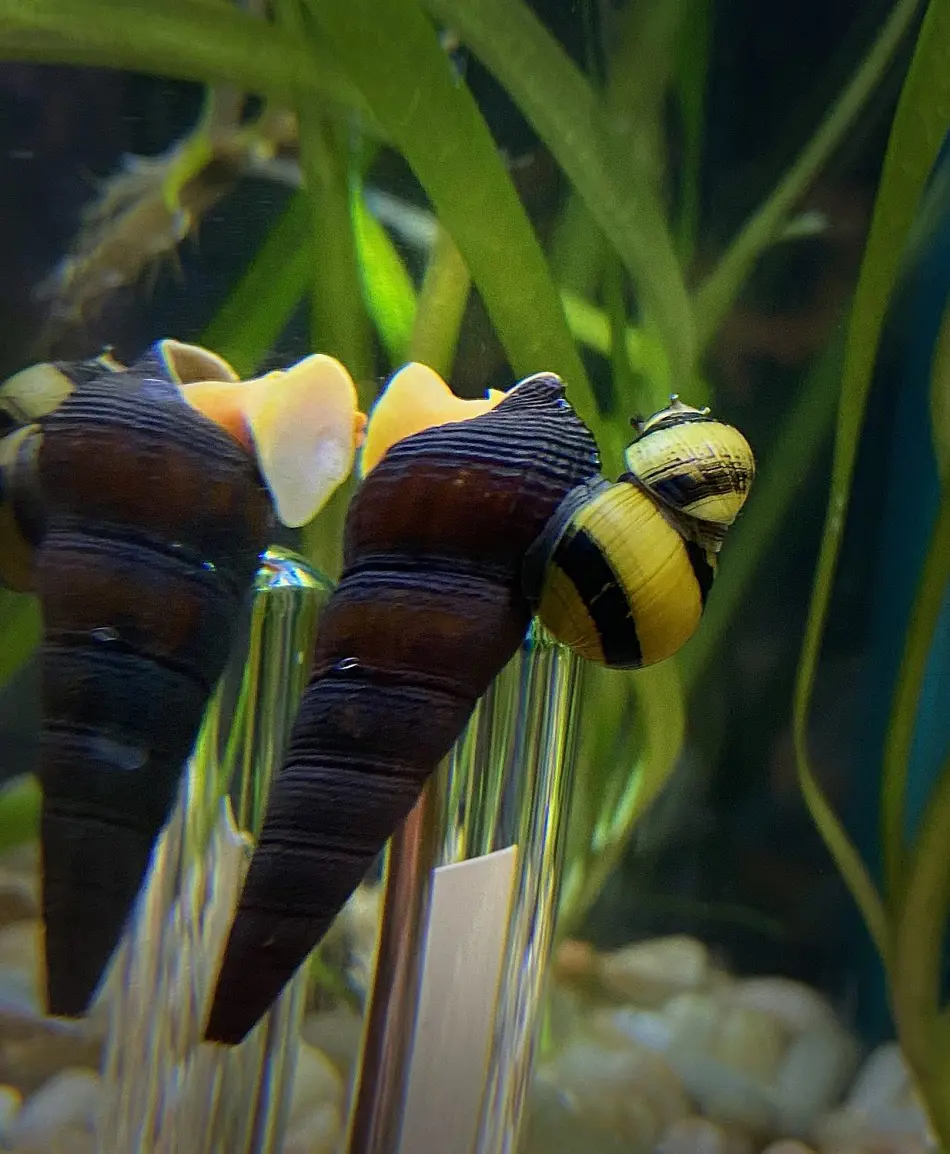
Rabbit snails easily have some of the coolest and most fascinating behavior out there in a freshwater aquarium. Below are a few characteristics about how they behave :
Slow and Deliberate Movement
- Rabbit snails are also slow in catching the pearls, be careful not to suck them up when you vacuum your tank.
- The slow, deliberate movement of these fish is mesmerizing and peaceful to watch in your aquarium.
- Though slow, they are always moving as part of their search for food or migration to new locations.
Daytime Activity
- Rabbit snails are a little different from the common view of many people about snails, most only know that they should be kept at dark hours and shouldn't see light.
- They are typically found in well-lit aquariums and you watch them interacting with the surroundings.
- They are also active during the day which makes them come alive in a tank and still achievable to watch and enjoy, increasing your tank's vitality.
Gentle and non-violent nature
- Rabbit snails are generally the best inhabitants you can add to a community tank.
- These species can live with other non-aggressive fish, so you may keep them in your mixed-species tank.
- They are a peaceful species that will not bother most other tank mates, but actively seek out algae to munch on or places where they can sleep.
Breeding Rabbit Snails
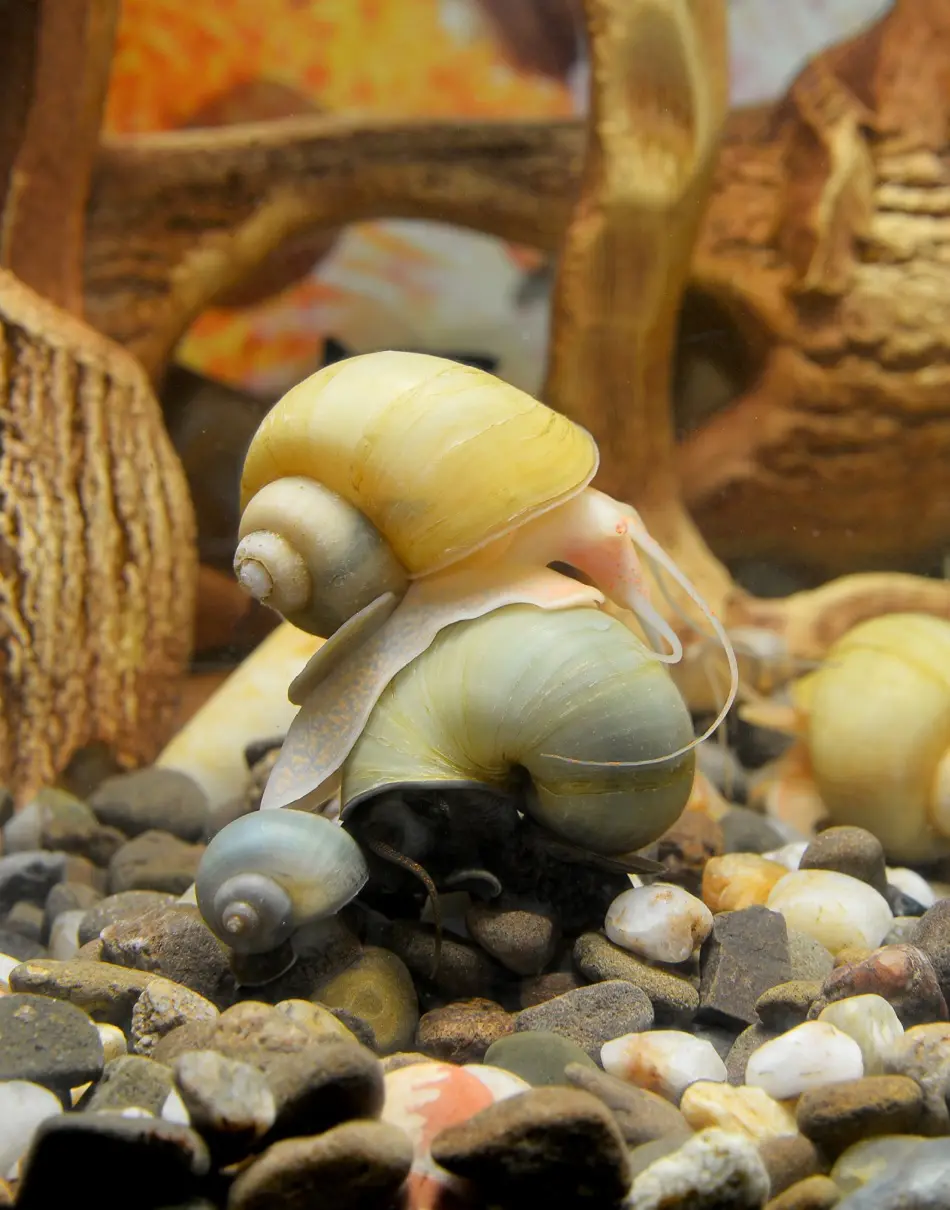
Breeding rabbit snails home is easy, especially when placed under the right circumstances.
These are life-bearing snails, so rather than laying eggs and having baby eggs hatch into babies, they bear fully developed youth that look like tiny translucent versions of the adults.
Reproductive Behavior
- When you compare these to other species, rabbit snails reproduce rather slowly in the time frame of several months.
- Once the snails mate, it can take up to several weeks for a female snail to produce its first offspring and she may continue giving birth to more babies later on.
- These baby snails are identical downsized versions of the adult, right down to their minuscule shells.
Ideal Breeding Conditions
- Make sure that your rabbit snails are in a good environment with no changes like sudden temperature or water properties fluctuations and they are well-fed.
- The female needs a temperature of around 80°F to be brought into breeding condition.
- Make sure to add lots of calcium sources, baby snails need them for their shells.
Caring For Baby Snails
- They were fragile when they first hatched but they sustained.
- They'll shortly start grazing the tank biofilm and algae.
- Ensure they have abundant food to eat.
- You can usually keep baby rabbit snails in the same tank as older adults. Rabbit snails are peaceful and likely won't harm their offspring.
Tank Mates For Rabbit Snails
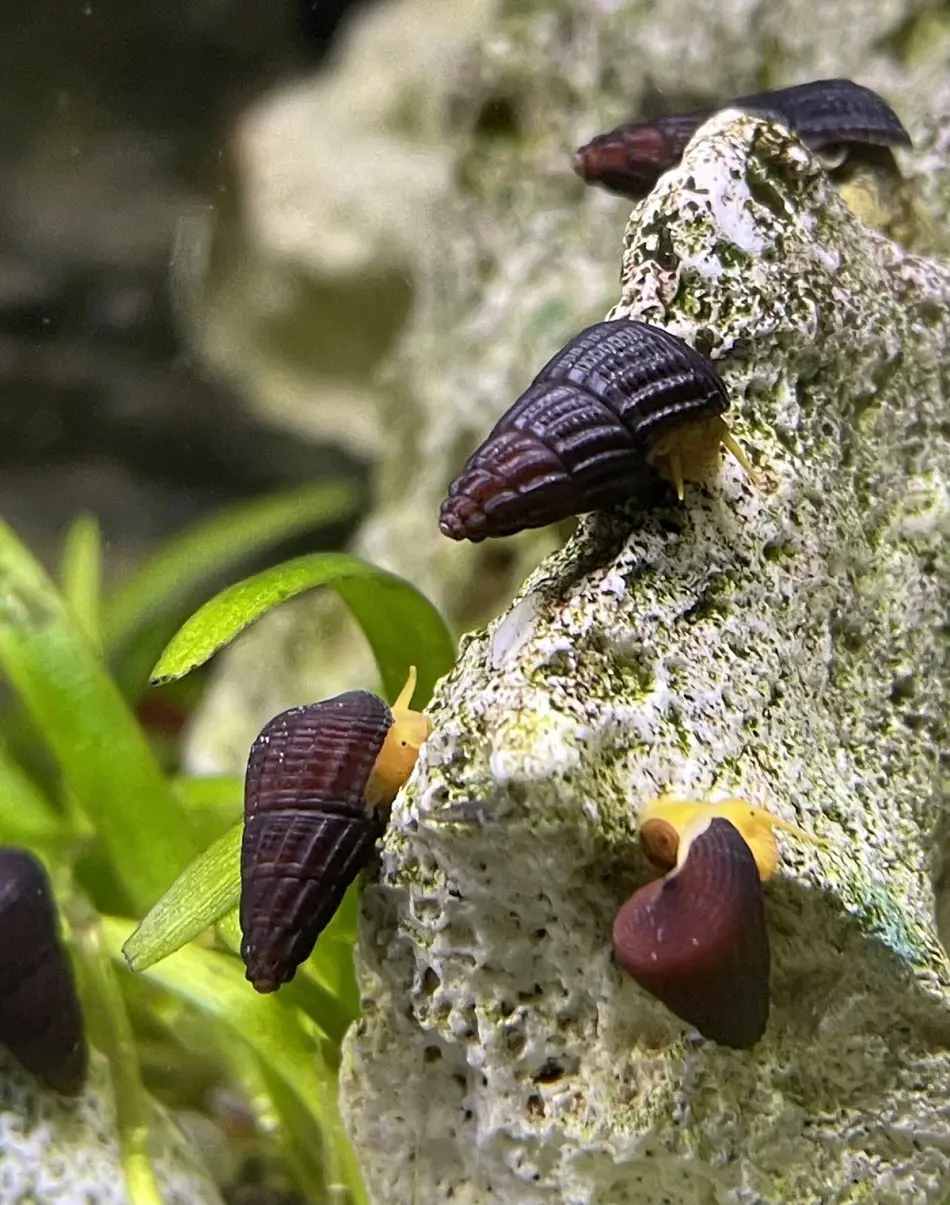
Choosing the right tank mates is important so that you can provide a peaceful and successful aquascape for your rabbit snails.
Rabbit snails have a weird and gentle non-aggressive nature that belies their impressive size, making them ideal for community tanks.
Still, any shelled animal that would do right by them would be a welcome addition to their party. The Best Rabbit Snail Tank Mates & Bad Companions
Best Tank Mates For Rabbit Snails
Rabbit snails get on well with a wide range of peaceful creatures that have similar water maximums and minimums. Some of the Best Options
Shrimp (i.e. Amano Shrimp, Cherry Shrimp)
- Shrimp is the Best Match for Elephant SnailsBetta and ADFs are fairly clean creatures
- Shrimps are also active foragers, which will help in maintaining any leftover food and algae at bay to support what rabbit snails eat.
Non-Aggressive Small Fish And Small Peace Fish
- Other great tank mates are small schooling fish (neon tetras, and rasboras) that stay in the mid to upper levels of the aquarium.
- They are peaceful species with similar water requirements which makes them excellent companions for a snail!
- Similar to rabbit snails, Corydoras catfish, and Panda Loaches get along if homebound together due to their ability to work alongside the feet of larger fish without being highly territorial or too aggressive about food.
Other Snail Species (Nerite Snails And Mystery Snails)
- Housing snail rabbits with any other peaceful species is generally trouble free if there's adequate room and food.
- Nerite snails work great to help keep your tank clean as they are voracious algae eaters, and will not take over the entire aquarium without a supply of brackish water in which to reproduce.
- Mystery snails have comparable care needs and can peacefully cohabit in the same tank so long as you do not overcrowd them.
Not only do these fish coexist well with rabbit snails, but they also make the tank more interesting visually.
Tank Mates To Avoid
Keep in mind rabbit snails may become tragic victims from aggressive or territorial tank mates although they are generally quite gentle.
Some of them can annoy, hurt or even kill your snails which besides causing stress could also lead to health problems. The types of species we want to avoid are:
Cichlids
- Cichlids, and specifically larger/more aggressive types like African cichlid species as well as South American variety are famous for being territorial.
- Rabbit snails might be eaten, by predators who view them as food or rivals, and any nibbling during relentless attacks would target their tender extremities.
Betta Fish
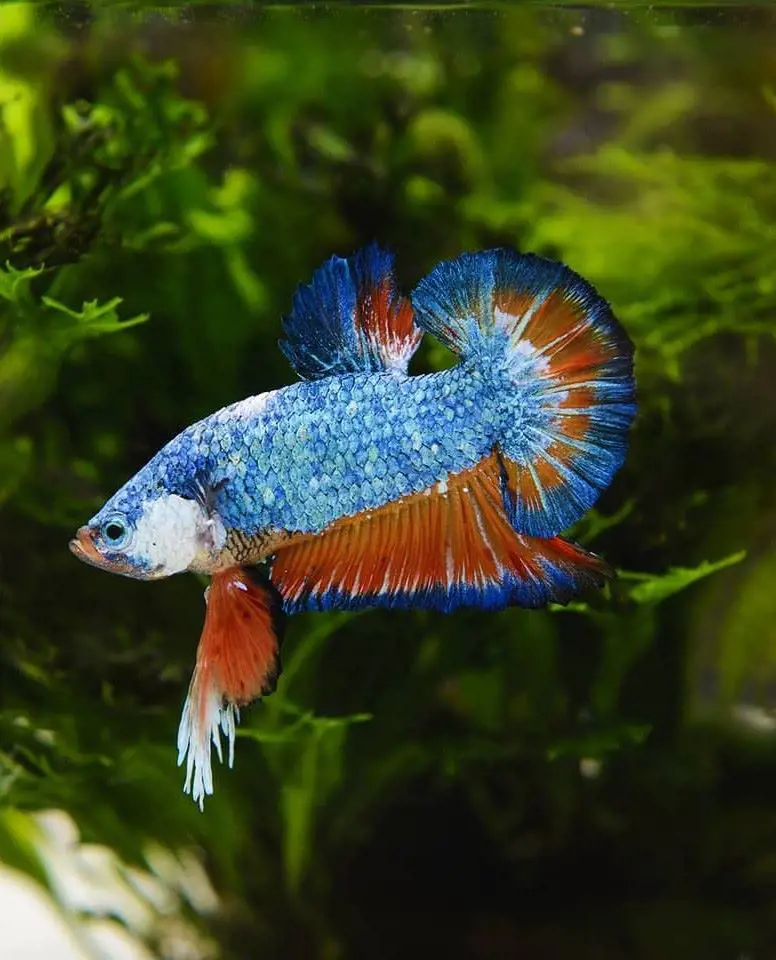
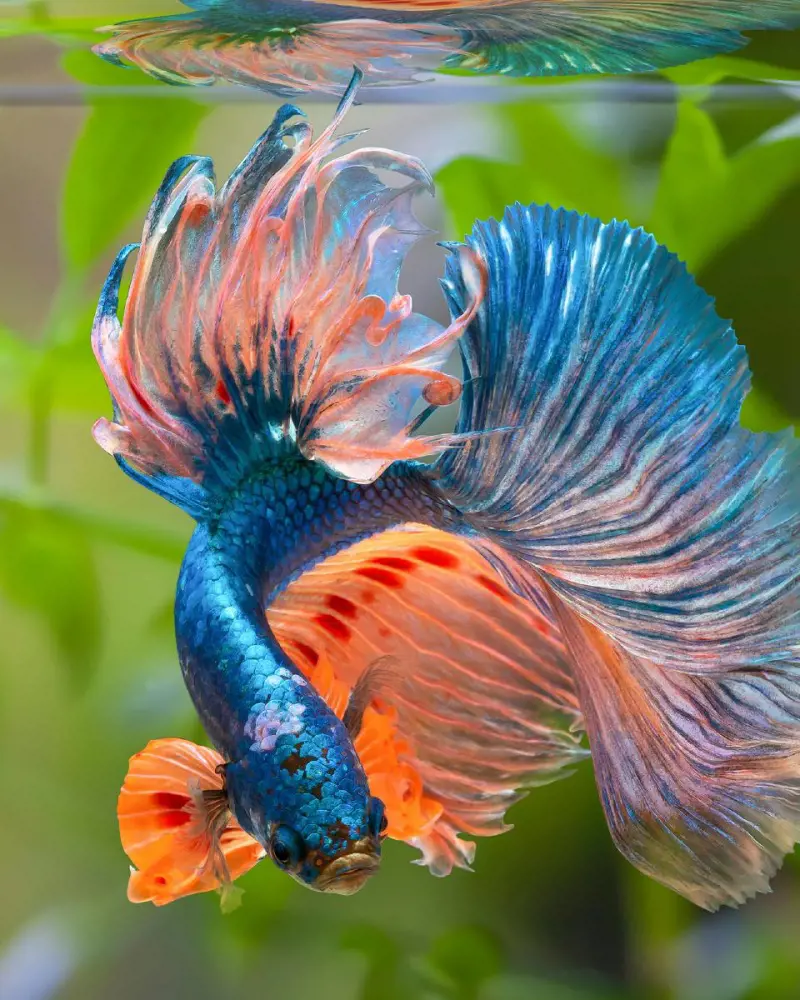
- Betas tend to be beautiful but incompatible with rabbit snails; they are competitive and territorial.
- Males will also nip at slower-moving tank mates such as snails.
Loaches (e.g., Clown Loach):
- Loaches come to mind when we think of natural snail predators, and the clown loach is exceptional at hunting down and consuming their slimy meals.
- They also have the power to consume a snail population in record time, so they are very poor companions for rabbit snails.
Crayfish And Crabs
- Crayfish Crabs They are highly aggressive scavengers and can be extremely destructive in an aquarium.
- However, they are potential predators of rabbit snails that can rip them apart or seriously injure rabbits in attempting to eat them.
- Smaller species such as dwarf crayfish can also be a danger to rabbit snails.
Peaceful species that are not going to bother or hunt down a rabbit snail should be preferred in setting up the community tank for Rabbit Snails.
Common Health Issues And Troubleshooting
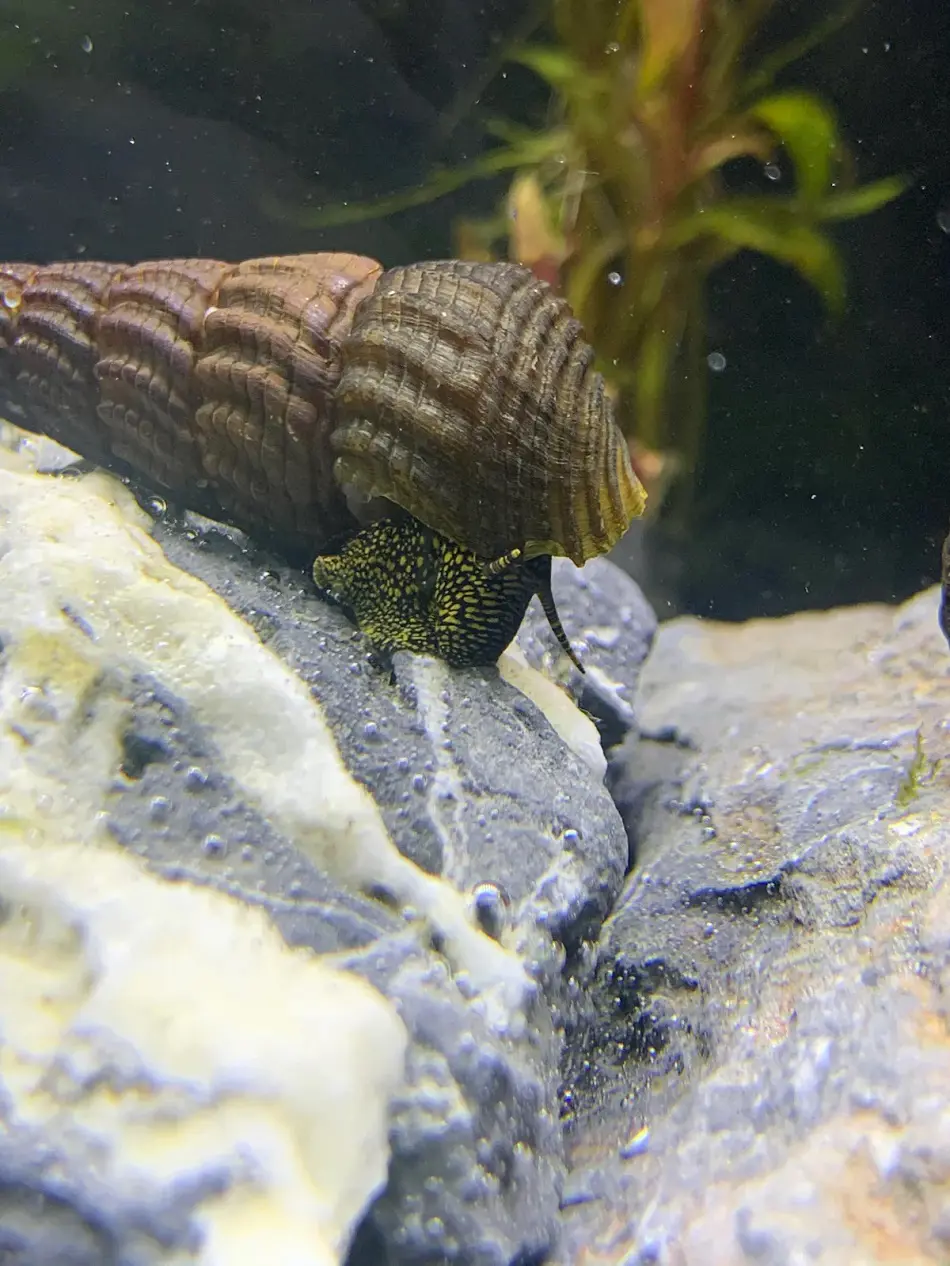
Rabbit snails are hardy creatures, but they can be prone to certain health issues if their environment is not looked after correctly.
Shell Erosion And Damage
Shell erosion from low calcium or poor water quality. When you see pits or when the skin thins, test your water hardness and ensure that their diets also have enough calcium.
Inactivity And Lethargy
Rabbit snails are typically slow-moving creatures but if they appear sluggish in comparison to their usual behavior, this may indicate stress or illness. Poor water quality, sudden changes in temperature, or lack of food result in inactivity and lethargy.
Parasites And Diseases
Unlike fish, elephant snails are less prone to parasites and diseases, but they can get parasites and diseases, especially in poorly maintained tanks.
Ensuring water changes are done properly every week, taking care not to overfeed the fish, and quarantining new items that go in your tank will help minimize any health problems.
Seasonal Effects On Rabbit Snails
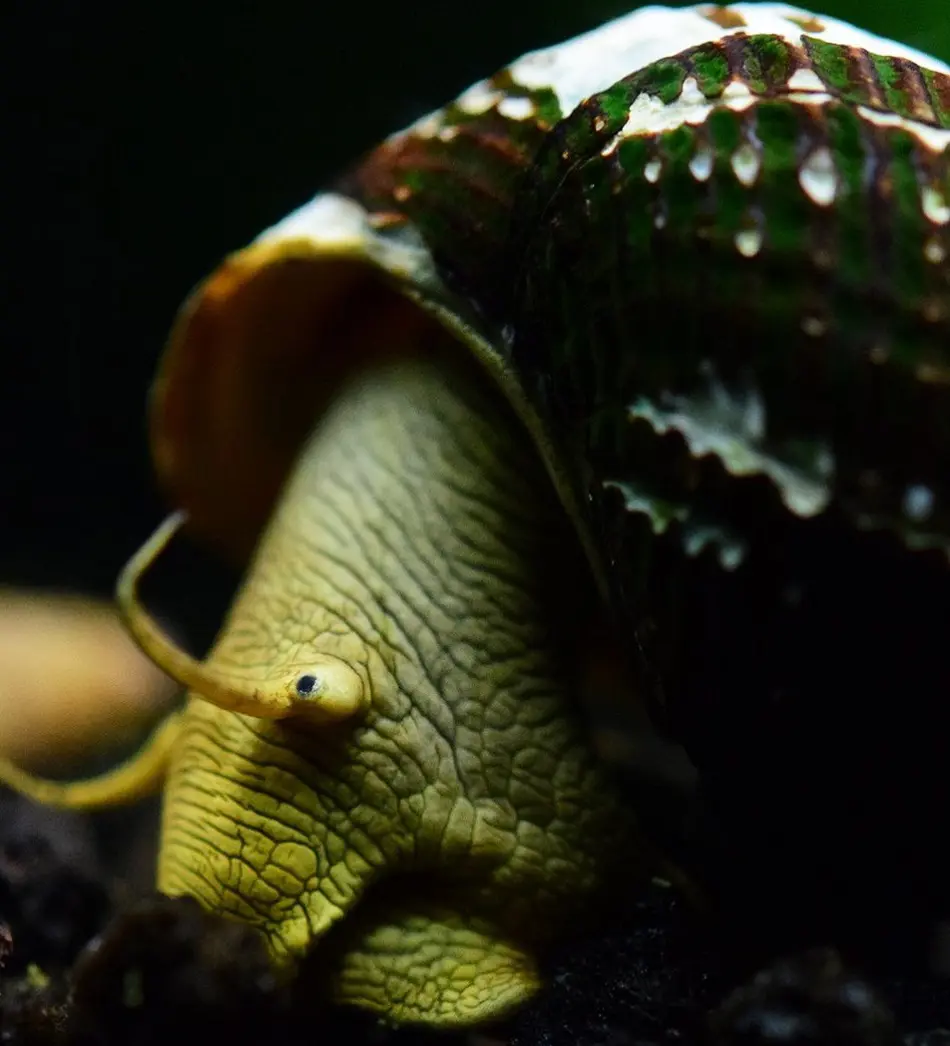
For animals, rabbit snails can be impacted by seasonal changes over time due to light, etc. Let me walk you through this with an explanation of how different seasons impact their care, it will be a crash course in understanding the lives of seasonal gardeners and hopefully give some guidance.
Temperature Management During Winter
- In winter when the water temperature drops it may see them hide away or go into hibernation.
- They need to have a stable temperature of 76-84°F (24-29°C) provided by an aquarium heater income outside detect.
- Steady warmth means they keep on feeding and moving, avoiding cold stress-related problems.
Light and Activity In Warmer Months
- In spring and summer with longer daylight hours, you could see an increase in the activity levels of the elephant's snail.
- More light stimulates more movement and feeding, which can be a good thing to nudge people gently into keeping an eye on that tank to ever so slightly stave off the day when all algae take over.
- This is done to provide a regular light routine for them which keeps their activity level in check without causing too much exposure to the high-intensity brightness.
Water Quality Adjustments Year-Round
- Since seasonal changes can cause the water parameters to fluctuate as well, these need more regular checking and observation if your area often experiences temperature shifts.
- During warmer months, evaporation can change the balance of minerals present in the water, while winter temperatures may alter its composition.
- Rabbit snails can be kept happiest when their water quality is properly maintained and adjusted through the various seasons to keep them healthy, all year round!
Ensuring Long-Term Health Of Rabbit Snails
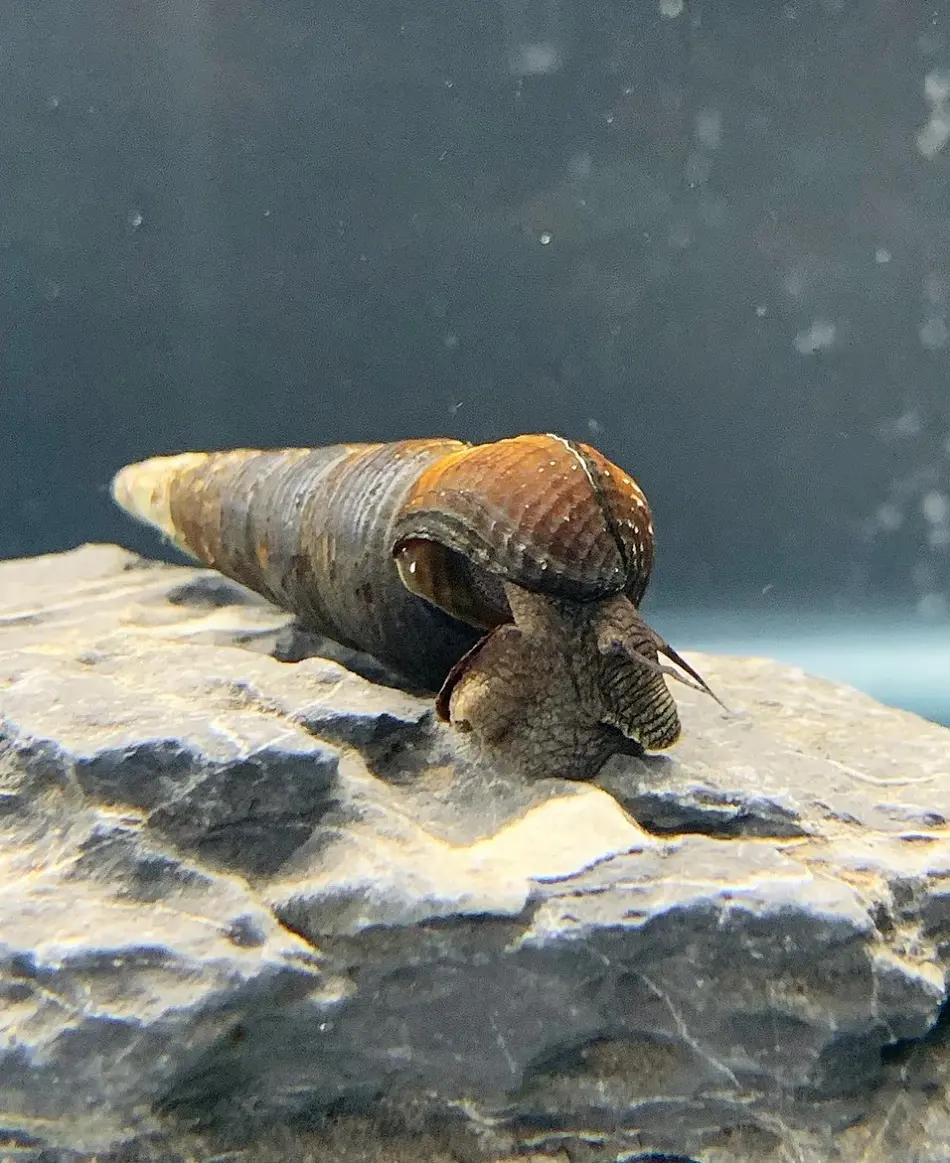
Several components need to be maintained for rabbit snails to remain healthy and thrive. Here is how you can make sure that they both become oldies:
Stable Water Conditions
- Because rabbit snails are so sensitive to changes in pH, hardness (specifically calcium levels), and temperature, their water parameters must remain stable.
- With regular water testing and consistent water changes, you can maintain the environment they need.
- Stress due to sudden changes in water parameters can cause your fish to become inactive or be less healthy.
Balanced And Nutritious Diet
- Feeding your rabbit snails an assortment of foods is crucial to its health, including algae wafers, fresh vegetables as well as calcium sources.
- Feeding food that provides calcium is important for the proper growth of the shell and its strength as deficiency can lead to erosion or other shell deformities.
- Consistent feeding schedules and regulation of food levels make sure that they are getting necessary nutrition without over-killing it.
Tank Sanitation With Maintenance
- Regular tank maintenance, including substrate cleaning and filtering, helps to eliminate potential sewers like ammonia and helps to clean the tank.
- Too many rabbit snails in a tank or too much waste from your fish can cause water quality to be poor, something which won't benefit them.
- A healthy environment fastens the way of life and it also secures danger otherwise which leads to various kinds of diseases.