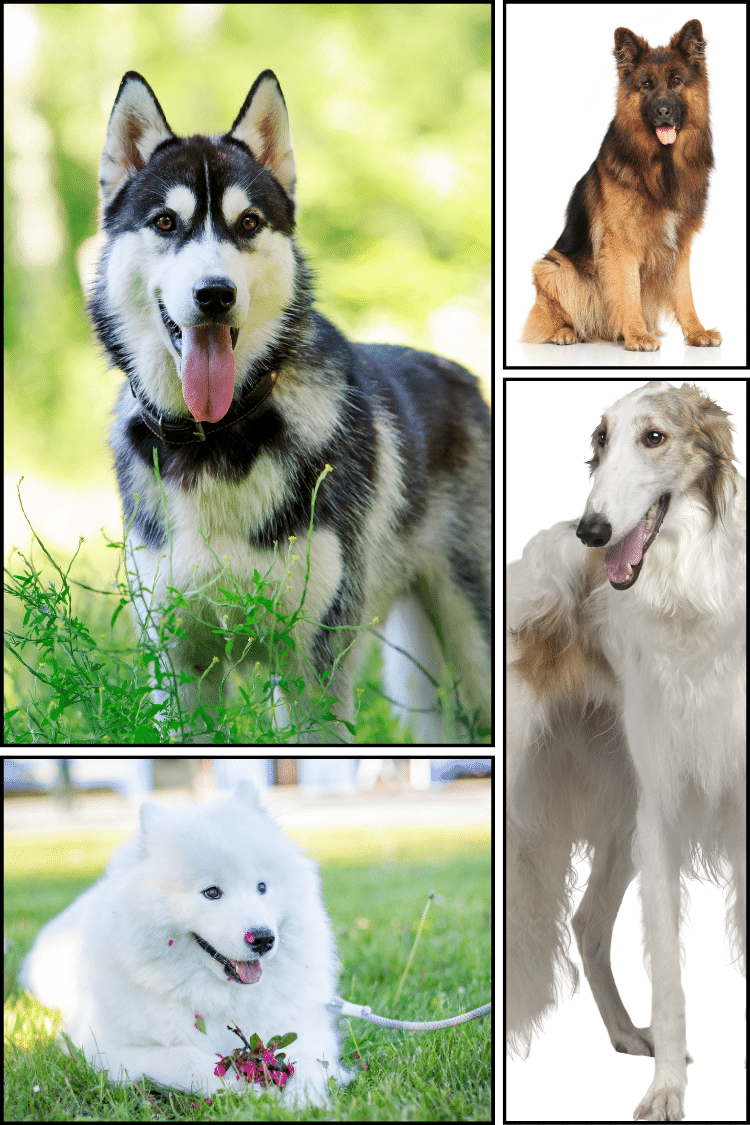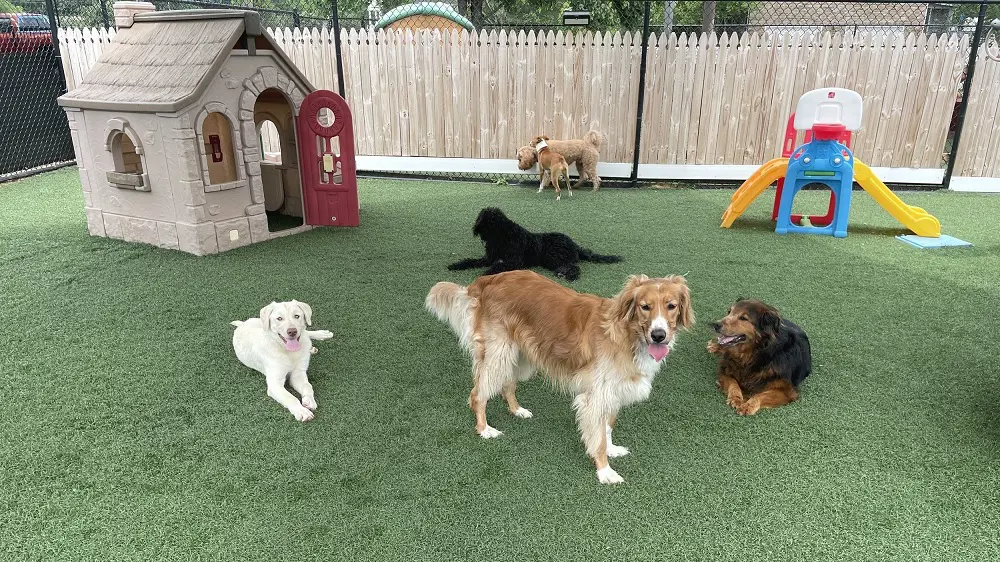



The expressive eyes of dogs can enchant anyone into falling in love with them. But these wide eyelets are often their weakest points.
Compared to humans, our canine companions have limited eyesight and color perception. Instead, they depend on other senses, such as hearing and smelling, to understand the world around them.
Even with their limited vision, dogs can form a pretty picture of their surroundings. This article provides you with key info on everything to know about dog eyes, from anatomy and night vision to sight issues.
Dog Eye Anatomy
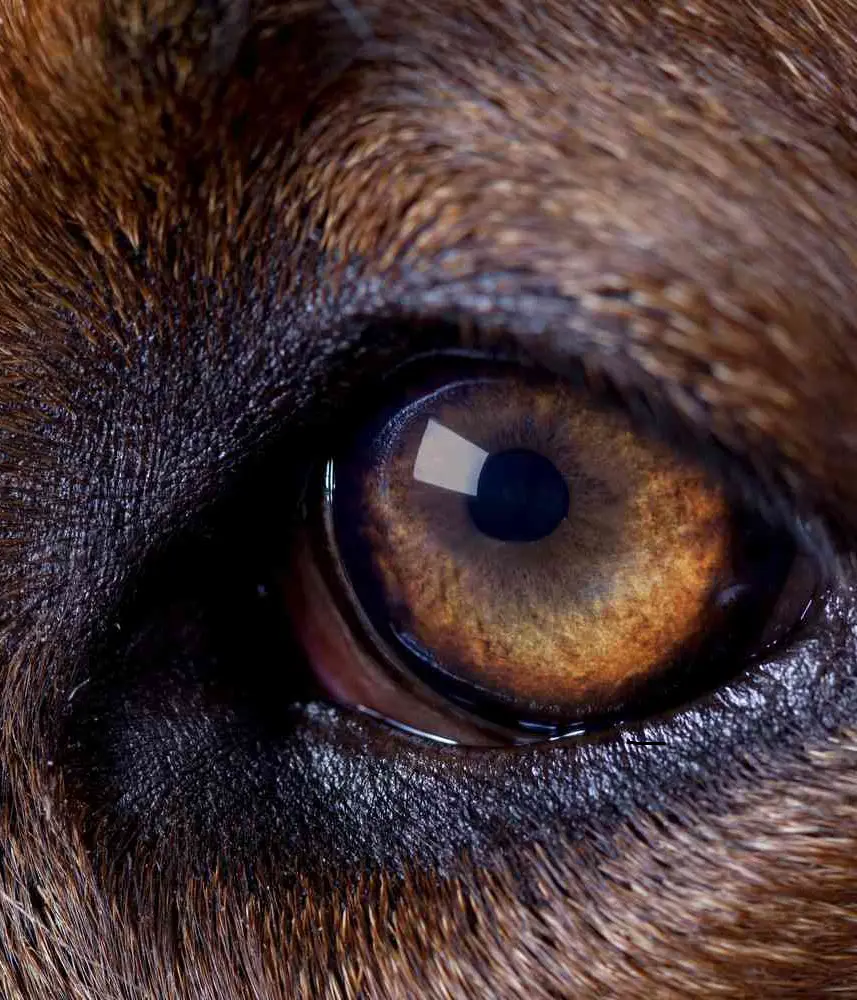
Dog eyes differ from human eyes in several aspects, not limited to vision. Canine eyes tend to be more almond-shaped compared to the rounder eyes of humans. The eye-shape can vary between different breeds. But, generally, it aids in their peripheral vision.
Unlike humans, dogs have a third eyelid, called the nictitating membrane, which provides additional protection and helps keep the eye moist.
These are some of the most significant parts of a dog's eye that contribute to its vision:
1. Cornea
Cornea is the dome-shaped front part of a dog's eye that covers the iris, pupil, and anterior chamber. It functions as a protective barrier against dirt, germs, and other potential hazards.
Compared to humans, a dog's cornea is more curved to aid in its wide field of vision. This vital eye-part is made up of five layers, including epithelium, Bowman’s layer, stroma, Descemet’s membrane, and endothelium. Each layer has a specific function, ranging from providing a smooth surface for light refraction to maintaining corneal clarity.
2. Iris
The colored part of the eye that surrounds the pupil is called the iris. It is made up of muscular tissues that expand and contract to control the size of the pupil. This tissue movement is crucial for regulating the amount of light that enters the eye.
Moreover, the iris has two layers, referred to as a simple front layer and back layer. The front layer contains pigment cells that determine eye color, whereas the back layer is rich in smooth muscle and blood vessels. Iris's ability to adjust pupil size protects the retina from excessive light and enhances dog vision under varying lighting conditions.
3. Pupil
It is the black, circular opening in the center of the iris. The size of the pupil changes in response to different light levels. For instance, it dilates in low light to let in more light and constricts (contracts) in bright light to reduce light entry.
Normally, a pupil in dog eyes is round in shape. However, it can appear oval in some breeds. The autonomic nervous system controls the dilation and constriction of the pupil through the muscles in the iris.
4. Retina
The innermost layer of a dog's eye, the retina is located at the back of the eyeball. This tissue contains photoreceptor cells called rods and cones, which convert light into electrical signals. These signals are then transmitted to the brain via the optic nerve, where they are processed into images.
Similarly, the retina also includes the tapetum lucidum, a reflective layer that enhances night vision by reflecting light back. This structure gives dogs’ eyes their characteristic shine in the dark.
5. Sclera
The sclera is the white, opaque outer layer of the eye. It is composed of dense connective tissue and forms the majority of the outer eye surface.
In canines, the sclera is typically white, although some pigmentation may occur near the iris in certain breeds. It also serves as an attachment point for the eye muscles, which control eye movement.
6. Lens
Located directly behind the iris and the pupil, the lens is a transparent structure. It focuses light rays onto the retina, allowing for clear vision.
The lens in canine eyes facilitates a greater range of focus when compared to the spherical lens in humans. It is composed of layers of protein fibers arranged in a precise pattern to maintain clarity and flexibility. Similarly, the lens can change shape to adjust the eye’s focus in a process known as accommodation.
7. Nictitating Membrane
Also known as the third eyelid, this translucent membrane is located in the inner corner of a dog's eye. It provides an additional layer of protection and helps to keep the eye moist by spreading the tear film across the eye’s surface.
The nictitating membrane contains a gland that produces a significant portion of the eye’s tears. It can become more dominant if the dog is unwell or has an eye condition, serving as an indicator of potential health issues.
How Do Dogs See?

Just like humans, canine vision is hugely dependent on the rods and cones in their eyes. Dogs more rod cells and fewer cone cells that helps them adapt to low light conditions.
While humans have trichromatic vision, dogs only possess dichromatic that can only detect two colors. This dichromatic vision results in a color perception similar to red-green colorblind humans, who cannot distinguish between red and green hues.
Additionally, dogs also have an excellent peripheral vision, extending around 250 degrees. This enhances their ability to detect peripheral movement but limits their depth perception and binocular vision range. Hence, dogs prioritize movement and low-light vision that gives them a perception of reality that is more attuned to their survival needs.
Can Dogs See Color?
Dogs can only visualize two colors: blue and yellow. Their color vision is limited because they have only two types of cone cells in their retinas, compared to the three types that humans have. Humans have trichromatic vision, with cones sensitive to red, green, and blue light. This allows us to perceive a wide range of colors.
In contrast, dogs have dichromatic vision with cones sensitive to blue and yellow wavelengths but lack the cone type for detecting red and green light. Instead, they view red and green as shades of gray or brown, making these colors indistinguishable from each other.
How Far Can Dogs See?
Dogs can see objects clearly up to about 20 feet away. This field of vision is relatively shorter compared to that of humans, who can see up to 75 feet away. Often referred to as the 20/75 vision, it implies that a dog sees at 20 feet what a human with normal vision can see at 75 feet. Essentially, their distance vision is less sharp than that of humans.
How far a dog can see also depends on the available light conditions. Dogs have more rod cells in their retinas, which are highly sensitive to low light. This adaptation is beneficial for dawn, dusk, or nighttime activities.
However, their ability to see fine details and colors in bright light is limited. During the day, dogs rely more on their other senses, such as smell and hearing, to compensate for their relatively poor distance vision.
Can Dogs Recognize Faces?
Dogs can identify human faces and the faces of their fellow canines. Studies have shown that dogs are also able to recognize and interpret human facial expressions. They use visual cues to differentiate between familiar and unfamiliar people and respond accordingly.
Additionally, dogs use a combination of visual and olfactory cues to distinguish between individual dogs. Dogs have specialized areas in their brains, similar to humans, that are involved in processing faces. This enables them to recognize facial features and expressions, aiding in social interactions within their species and with humans.
Do Dogs Have Night Vision?
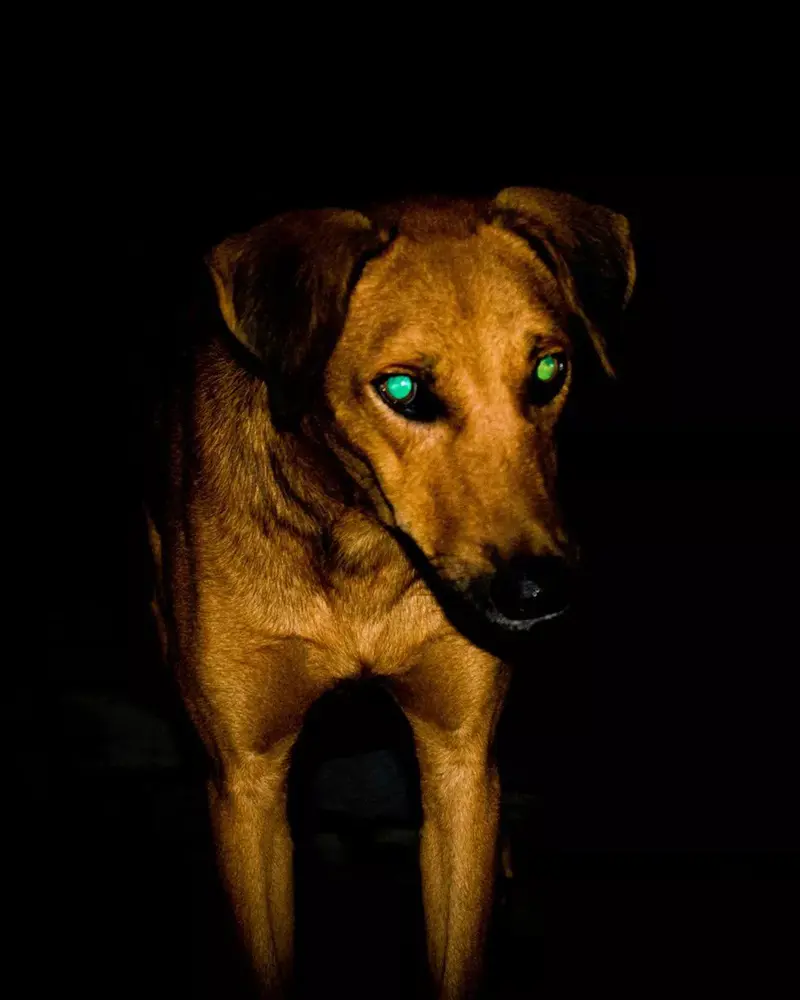
Dogs are born with a relatively strong night vision, though not as acute as some other animals. Their retinas contain more rod cells, which are more sensitive to low light, This allows them to see better in the dark than humans.
Additionally, dogs possess a tapetum lucidum, a reflective layer behind the retina that enhances night vision by reflecting light that passes through the retina back into their eyes. This gives their eyes a characteristic glow in the dark.
Comparatively, dogs' night vision is not as developed as that of cats or wolves. Cats have a higher concentration of rod cells and a more efficient tapetum lucidum, allowing them to see in nearly total darkness. Similarly, wolves, as nocturnal hunters, have night vision superior to dogs.
On the other hand, humans have poor night vision due to a higher concentration of cone cells. Their vision is only suited for for daylight and colors. Thus, while dogs navigate well at night, their night vision is outclassed by felines and their close cousins, wolves.
Dog Breeds With Best Night Vision
The power of dogs' night vision often differs according to breeds. This variation is largely influenced by the differences in the size and structure of their eyes, as well as the proportion of rod cells in their retinas. Breeds that have been historically used for hunting or herding, such as German Shepherds or Border Collies, tend to have better night vision.
On the other hand, brachycephalic breeds like Bulldogs and Pugs, have shorter, more rounded skulls and eyes set closer together. Their eye structure can limit their overall field of vision and may affect their ability to see in the dark.
Dog breeds with the best night vision include:
- German Shepherd
- Border Collie
- Labrador Retriever
- Siberian Husky
- Beagle
- Rottweiler
- Belgian Malinois
- Australian Shepherd
- Golden Retriever
- Coonhound
Are Dogs Blind At Birth?

Puppies are blind when born, they have closed eyes and an underdeveloped optical system. Their initial blindness is an evolutionary adaptation, as puppies are born during a stage of rapid growth and development that continues outside the womb. Being born blind allows puppies to focus their energy on crucial developmental processes like strengthening their immune systems and physical growth.
It usually takes about two weeks for puppies to open their eyes. But, even then, their vision is still blurry. Over the next several weeks, their eyesight gradually improves. By the time they are eight weeks oldmost puppies have developed functional vision although it continues to sharpen and refine as they grow. During this period, their retinas mature, and their neural pathways involved in processing visual information become more established.
Dogs Peripheral Vision
With a field of view that can reach up to 250 degrees, dogs possess excellent peripheral vision. Their vision is onsiderably wider than the 180-degree range typical for humans. This wide peripheral vision is a result of their evolutionary history that supports them in detecting potential threats and prey from various angles without needing to turn their heads.
The placement of a dog's eyes on the sides of their head enhances this peripheral vision, helping them to be more aware of their surroundings. While their central vision isn't as sharp as humans, this extensive peripheral vision makes dogs excellent at noticing movements.
Dog Sight-Related Issues
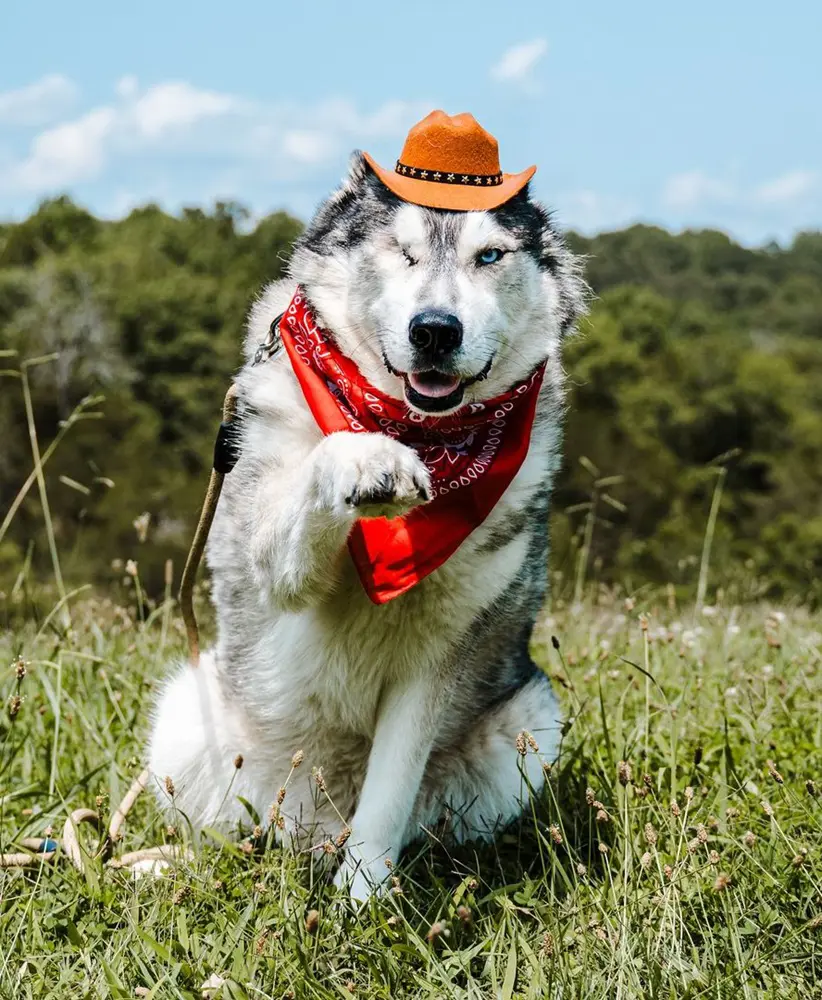
Dogs have quite resilient eyes that are various environments and conditions. They also have a third eyelid, which helps shield them from debris and injury.
However, they are still vulnerable to environmental factors such as UV light, dust, and allergens that can also affect their eyes. Certain breeds are prone to specific eye conditions; for instance, brachycephalic breeds like Pugs and Bulldogs are more likely to suffer from corneal ulcers due to their prominent eyes.
Some common dog sight-related issues include:
1. Cataracts
Cataracts in dogs occur when the lens of the eye becomes cloudy. The condition can result from genetics, aging, diabetes, or eye trauma.
Dogs with cataracts may exhibit signs such as cloudy eyes, difficulty navigating, or reluctance to move in unfamiliar environments. Cataracts block light from reaching the retina, reducing vision clarity and causing progressive blindness if untreated.
In some cases, cataracts can be surgically removed. The cloudy lens is replaced with an artificial one during the surgery.
2. Glaucoma
Glaucoma is a serious condition characterized by increased intraocular pressure, which damages the optic nerve and leads to vision loss. It can be hereditary or develop due to other eye issues like cataracts or inflammation.
Symptoms include eye pain, redness, cloudiness, and vision impairment. Dogs might show signs of discomfort, such as pawing at their eyes or avoiding light.
Glaucoma is diagnosed through eye pressure measurements and exams. Treatment options include medications to reduce eye pressure and surgical procedures to improve fluid drainage. Prompt intervention is essential to prevent irreversible blindness and manage pain.
3. Retinal Degeneration
Retinal degenerative conditions like Progressive Retinal Atrophy (PRA) are typically inherited and lead to the gradual deterioration of the retina. Dogs with retinal degeneration initially experience night blindness, struggling to see in low-light conditions. Over time, their daytime vision also deteriorates.
The onset of retinal degeneration can vary, but it generally progresses slowly. There is currently no cure for this condition; however, measures such as antioxidants and nutritional supplements may slow its progression. Genetic testing can identify carriers, allowing breeders to avoid mating with dogs that might pass on the condition.