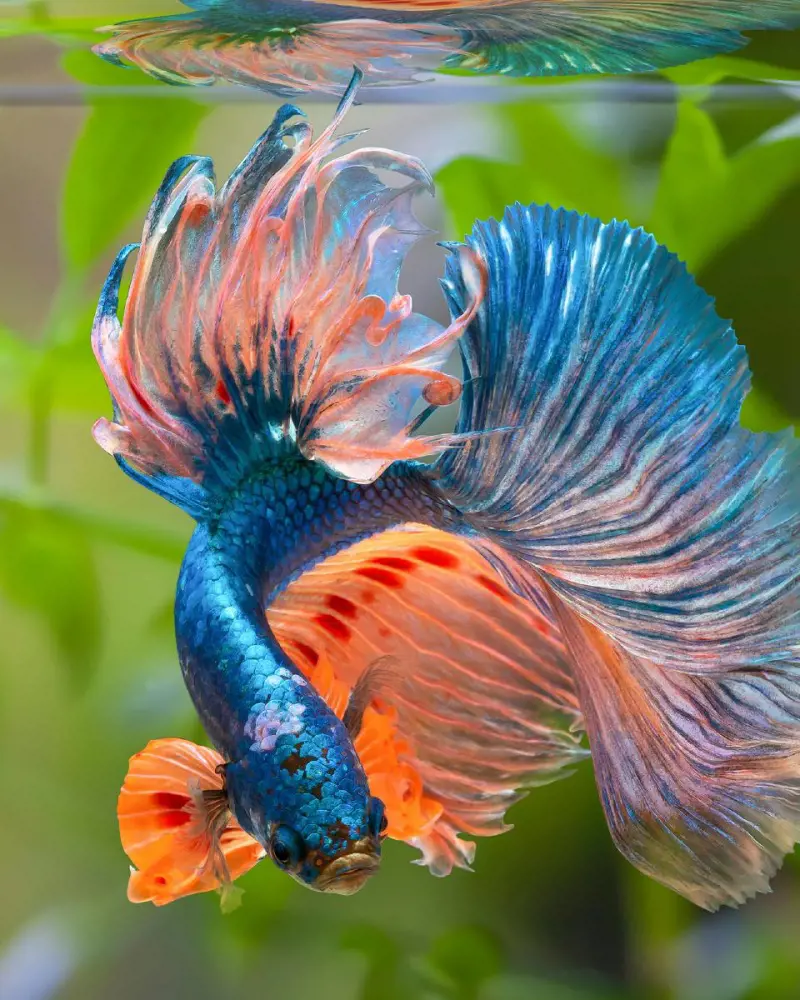


Aquarium snails are beautiful, multiskilled creatures that play a significant role in maintaining a healthy aquatic environment. They add both attractive and functional benefits to freshwater tanks.
These creatures are also a great help to control algae growth and clean up the detritus. With proper care and conditions, they can enhance your tanks and contribute to the overall look and health of your tank. To learn more about them, let's dive into the 20 types of Aquarium Snails that can be found.
1. Apple Snail
Apple snails are large tank snails that are found in various shell colors, including golden, blue, and brown. These snails consume algae and decaying plant materials and also gnaw at live plants.
Their shells tend to grow up to 6 inches in diameter and are smooth and glossy. While keeping them in a tank, the water should be clean and in stable conditions. Moreover, you should secure the tank with a lid as they are known to crawl out of the tank.
2. Nerite Snail
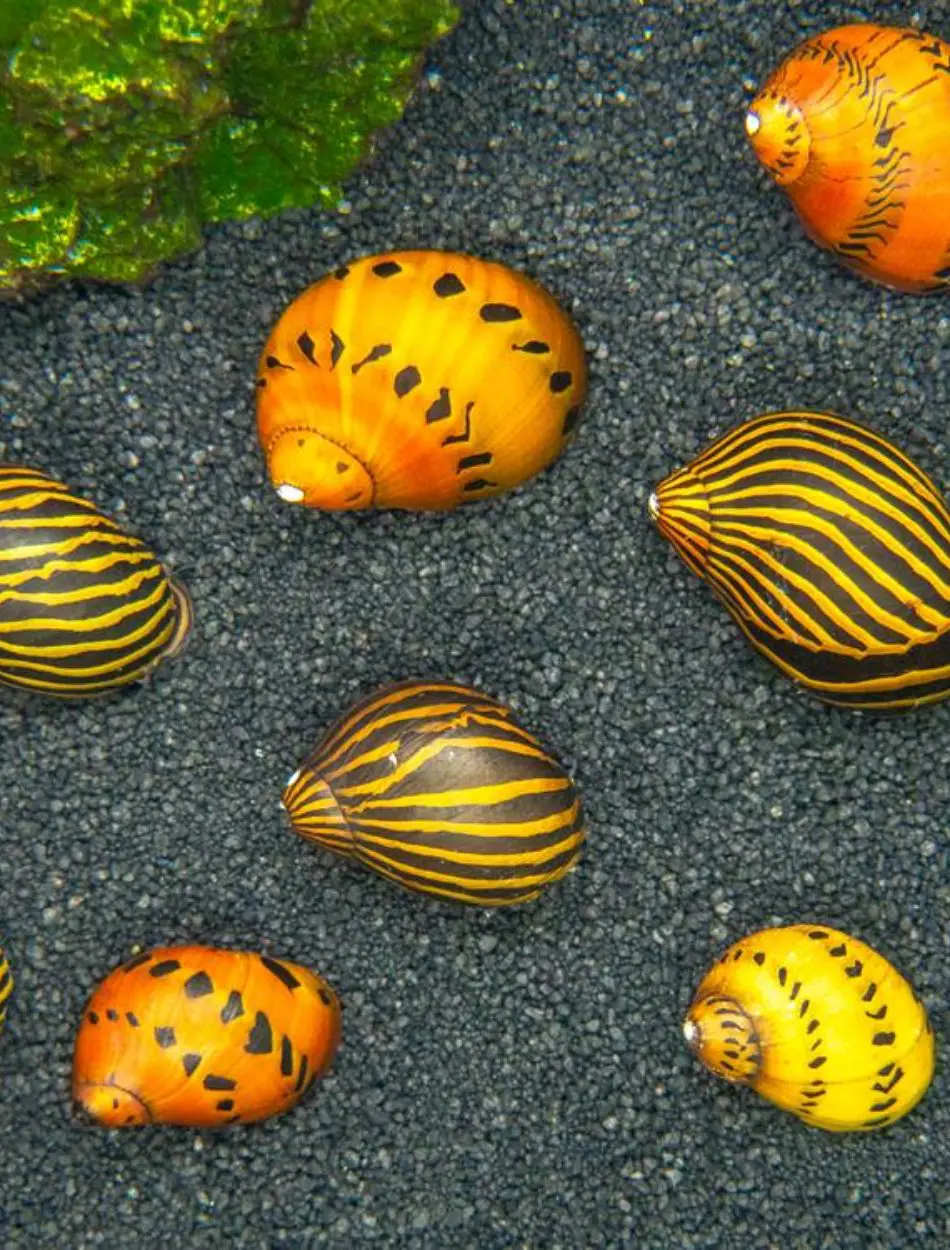
The Nerite snail, scientifically known as Neritina sp, is famous for its striking, colorful shell that comes in different colors such as zebra stripes, spotted, and other beautiful designs. Their shells have ribbed or ridged patterns.
They can control algae growth on glass, decorators, and substrate as they feed on algae. They also eat leftover food and have a low impact on live plants, making them excellent for planted tanks.
These snails thrive well in a clean, well-maintained tank that contains freshwater. The tank should contain plenty of hiding places and algae for consumption purposes. The lid of the tank must be secured as they can occasionally escape from the tank.
3. Mystery Snail
Mystery Snails are peaceful tank mates that are large, attractive shells of different color variations. They have rounded shells that can grow up to 2 inches in diameter and are found in colors such as gold, blue, purple, and ivory.
If you are planning to tank one, make sure the tank is freshwater and in well-maintained stable condition. If you do not want them crawling out of the tank, securing the tank with a lid is another point you should not miss out on.
This snail diet contains algae, leftovers, and decaying plants and also nibbles on softer varieties of live plants. In addition, they have a peaceful temperament and can live with many fish.
4. Ramshorn Snail
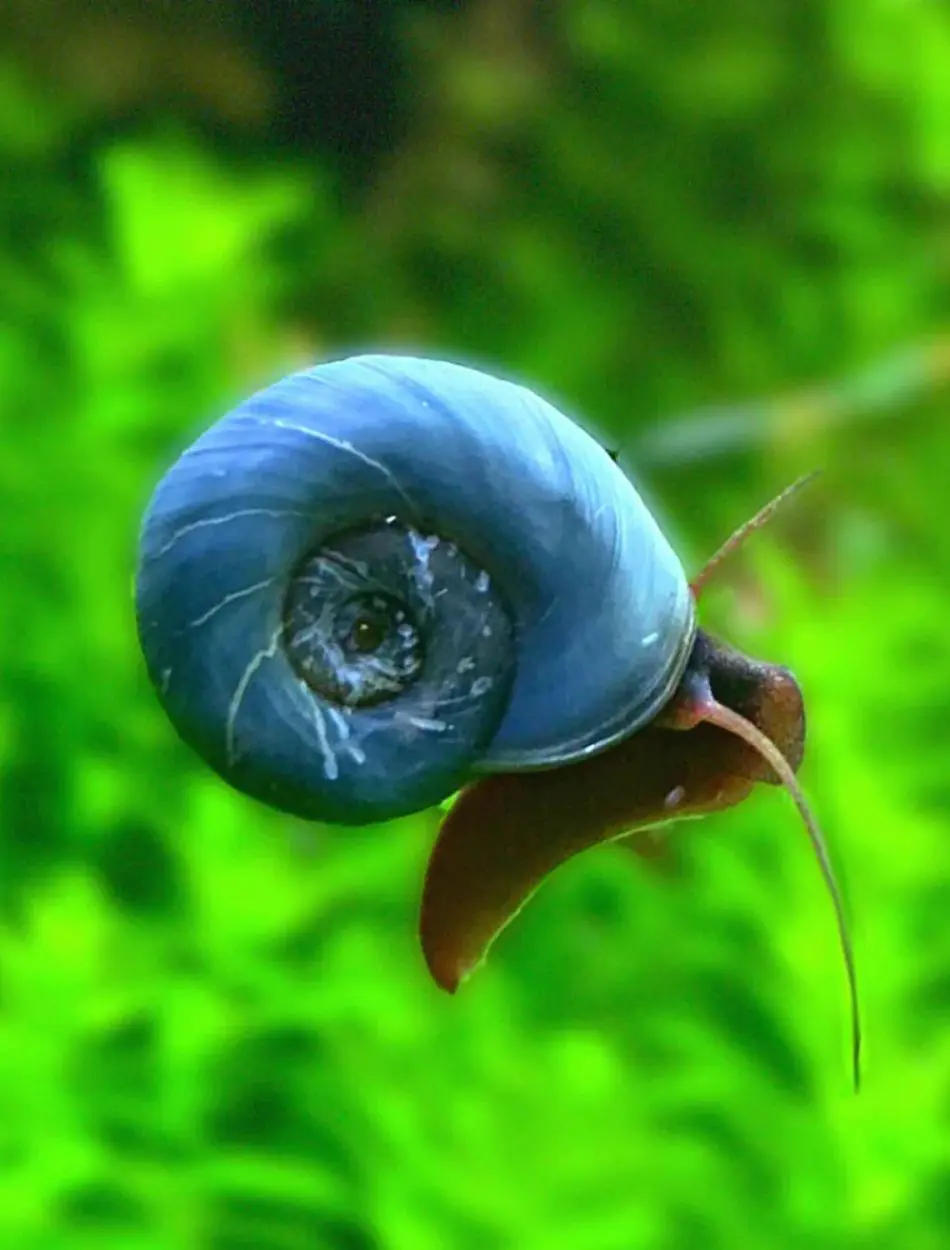
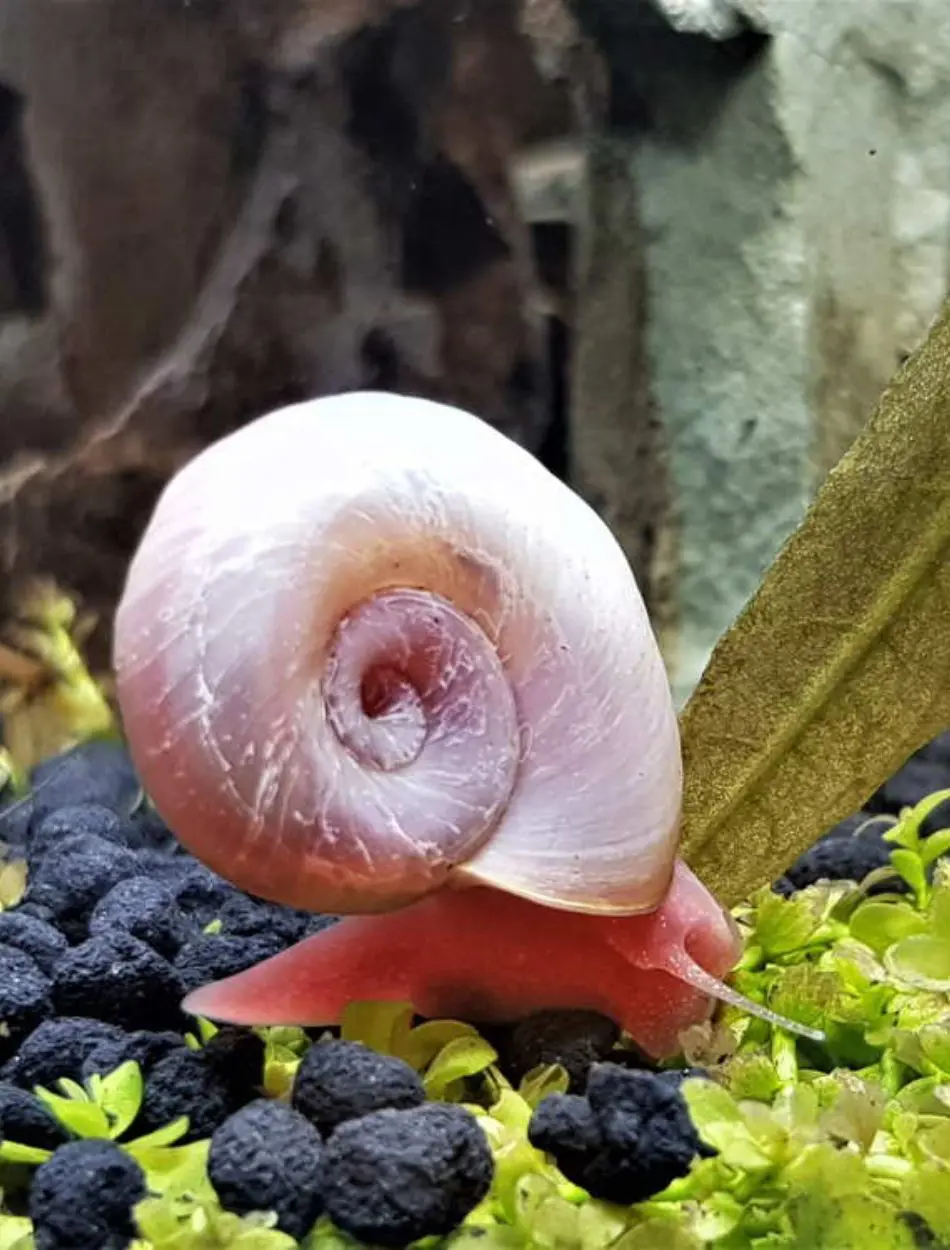
Ramshorn snails are medium-sized snails that resemble a ram's horn. The shells of these snails are coiled, flat, and spiral outward and come in colors such as brown, red, black, and translucent.
These tank snails survive on algae, waste matter, decaying plants, and even softer live plants. Due to this reason, they contribute to keeping the aquarium clean. While these snails can adapt and tolerate different environments, they thrive in clean, filtered water.
They can be tanked with a wide range of fish and invertebrates. But it is very important to manage them as they can be an inconvenience if their population is not controlled.
5. Malaysian Trumpet Snail
Malaysian trumpet snails are small, cone-shaped snails that dig out into the substrate to infiltrate it. These species can be overpopulated if they are not managed and controlled properly.
These snails have conical, elongated shells, in spiral shapes that look like trumpets. Moreover, the shells also have ribbed or textured surfaces and are found in brown or grayish color. They love to feed on organic matter in the substrate, including decaying plants, algae, and waste materials.
Malaysian Trumpet snails should be kept in a tank that has a well-maintained substrate and good filtration. Keeping them in a well-filtered tank with stable water conditions, gravel, or sand substrate will help them thrive.
6. Japanese Trapdoor Snail
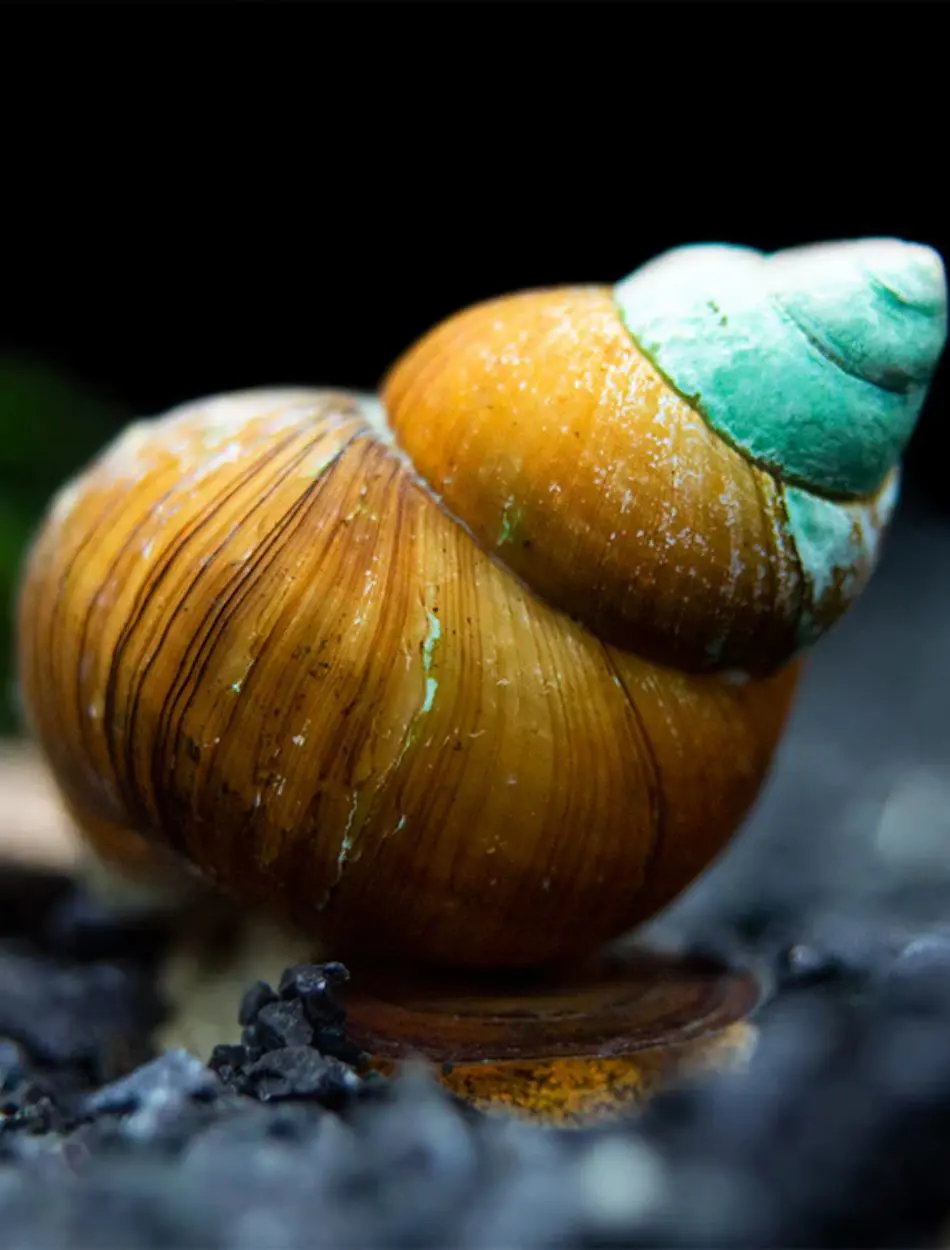
Known for its hard, trapdoor-like shells, the Japanese Trapdoor Snail is a good algae and detritus-eating tank snail. One of the distinct features of this species is that their trapdoor mechanism allows them to retreat into their shell for protection.
The shell of these snails is mostly brownish-green or olive. The rounded trapdoor shell seals the opening which protects the snail. They are peaceful, slow-moving creatures that survive well in well-oxygenated, stable, and gentle current water. They survive on food like algae, waste materials, and sometimes plant matter.
7. Assassin Snail
Assassin Snails are active predators that target other snails such as pond snails and bladder snails. They have a conical, elongated shell that has a pointed tip and can be found in colors such as yellow, brown, or gray with darker patterns.
Due to their predatory nature, they use their proboscis to feed on their prey. This helps them to control the pest snail population. They can live with fish like tetras guppies, and rasboras. It is advised to avoid keeping them with aggressive or active fish that may disturb them.
They can be kept in tanks with stable water conditions, soft substrate, hiding spots, and moderate water flow. Their primary food is other snails but also love to eat leftover food and sometimes algae.
8. Pond Snail
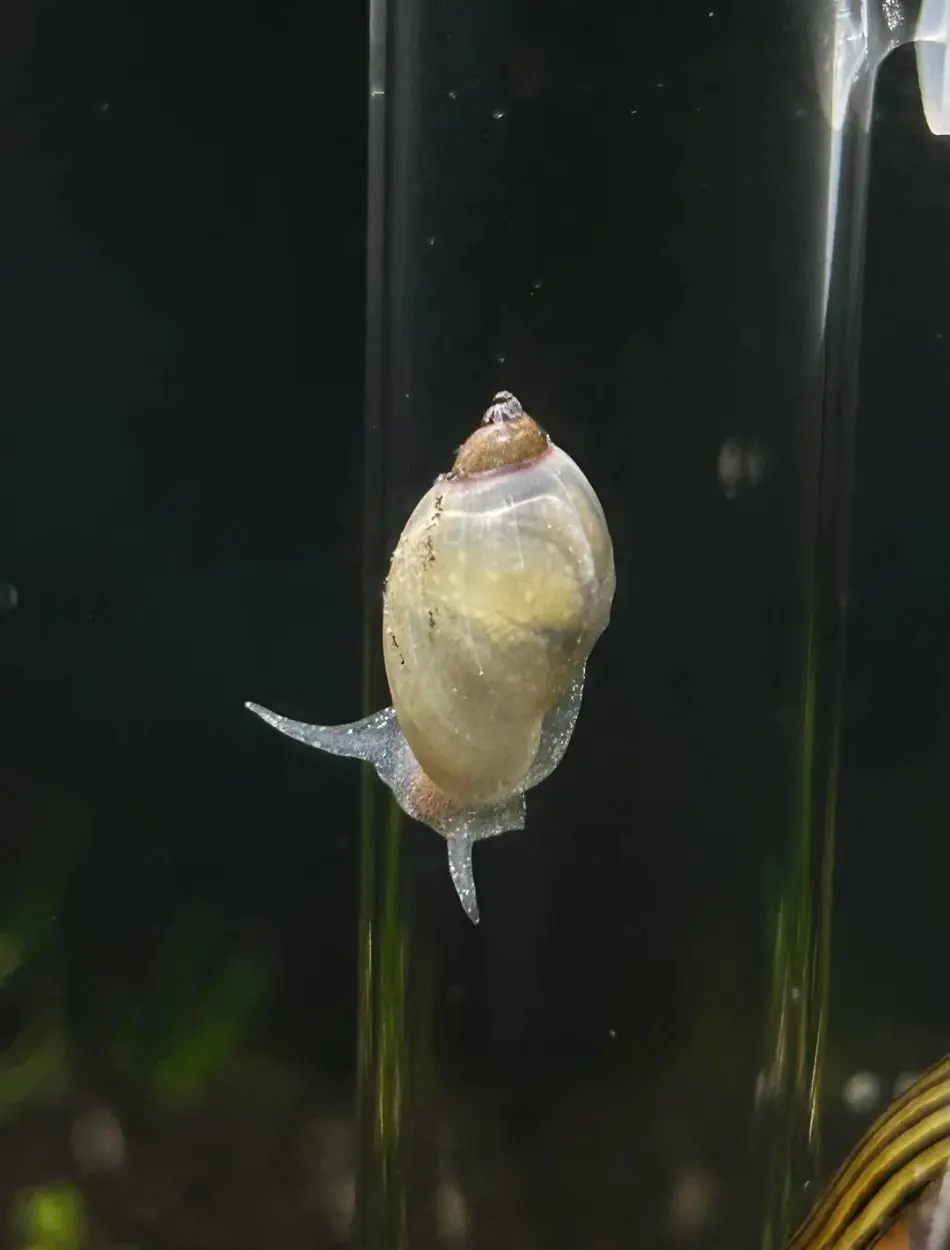
If you plan to add a pond snail to your tank, this species will move slowly across the tank with its small, translucent shell. Their shells are conical or slightly spiraling and are found in light brown, tan, or gray colors.
Pons snails are mostly peaceful and active. They are compatible with fish such as tetras, guppies, rasboras, and shrimps. Keeping them in a freshwater aquarium and feeding them algae, detritus, and leftover food will help them lead a healthy life.
9. Bladder Snail
The Bladder Snail is a small type of tank snail that has a translucent shell to help clean algae. The shell is round, smooth, and glassy.
They are named after their distinct, slightly inflated shell shape that looks like a bladder. These species are active grazers that consume algae, detritus, and leftover food that helps to maintain a cleaner tank by reducing excess organic waste.
They reproduce rapidly, so, they should be monitored regularly and the excess snails should also be removed if and when necessary. They are generally peaceful and thrive with many fish and invertebrates. However, avoid keeping them with aggressive or highly active fish.
10. Pagoda Snail
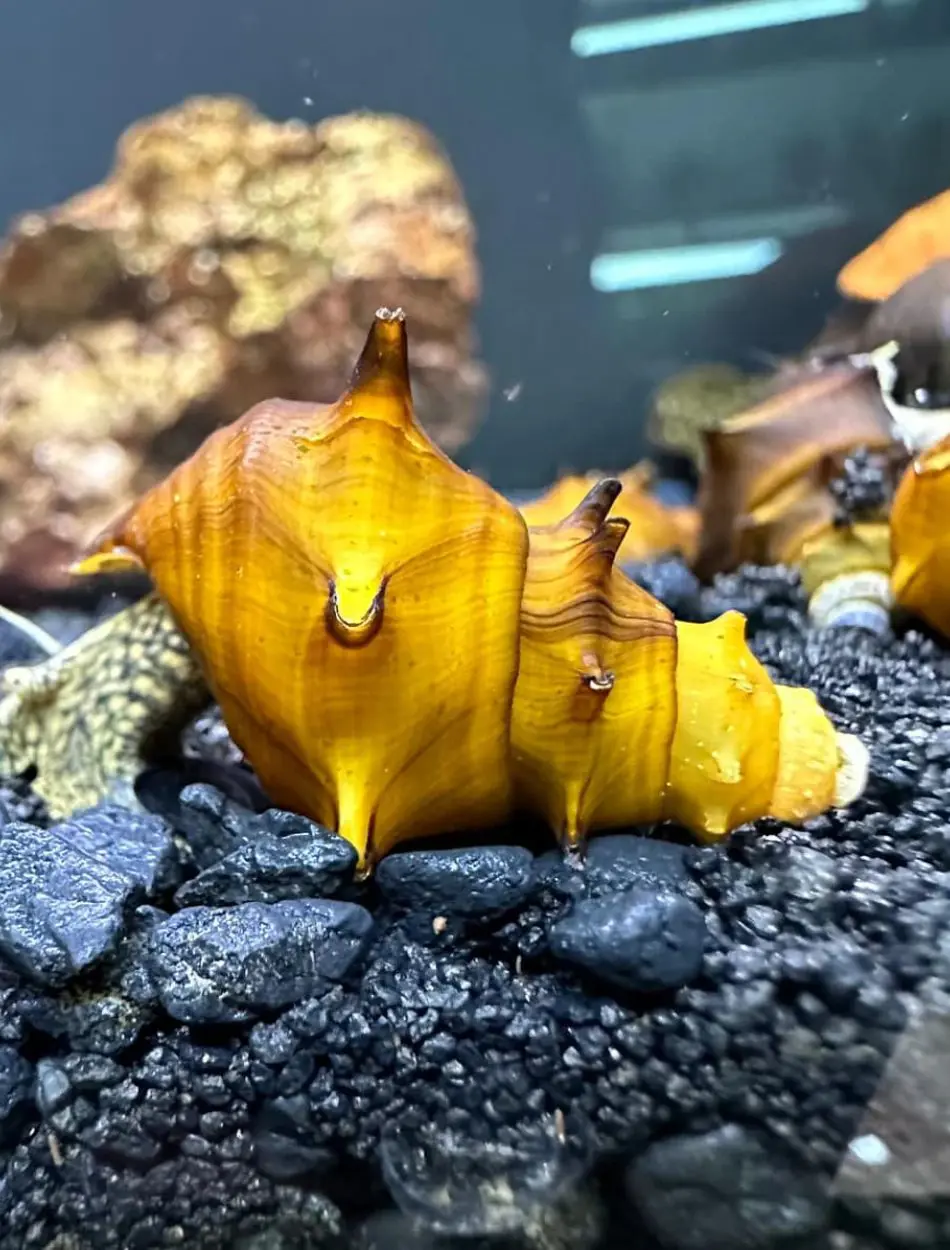
The Pagoda Snail is a spiky-shelled unique aquarium snail that resembles a pagoda. They can be found in brown color, with pronounced ridges and spikes that give the snail a textured look.
The body of these snails is usually lighter in color, mostly white or light gray, which adds a unique visual appeal. Pagoda snails tend to keep the tank clean by feeding on uneaten food and organic waste. They also feed on algae and biofilm.
They should be kept in a tank with hiding spots and a soft substrate to avoid damaging their shells. While they eat algae and biofilm, their diet also consists of balanced vegetables such as algae wafers and high-quality sinking pellets. They are peaceful and calm creatures, so, they can be kept with small fish, shrimp, and other snails as long as they are not large or aggressive.
11. Tiger Nerite Snail
Known for its exceptional algae-eating abilities, the Tiger Nerite Snail is an attractive snail that has bold black stripes on a yellow or orange background. Their stripes imitate the stripes of a Tiger and are hence named Tiger Nerite Snail.
These snails thrive in both freshwater and saltwater but need saltwater to reproduce. Moreover, their diet must contain rich calcium or supplements to maintain shell health. They can be kept with tetras, guppies, rasboras, and shrimp.
12. Ivory Snail
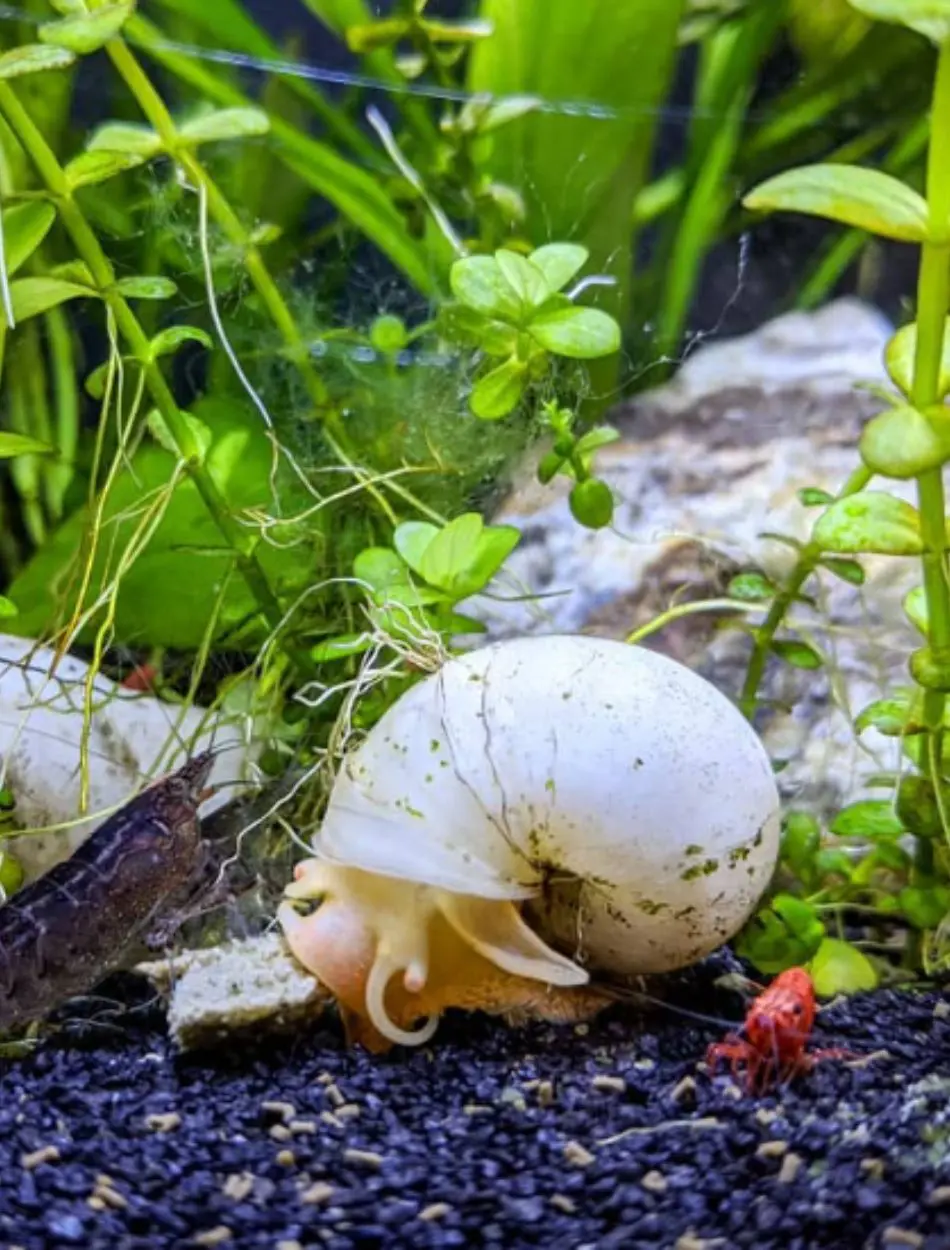
Ivory Snail is a calm, peaceful, non-aggressive creature that is off-white, creamy, and smooth in texture with orange spots accenting the top of its head and mouth. Their white shells look beautiful when kept in a tank filled with green plants, black substrate, or a black background.
Their diet must contain calcium-rich foods and supplements to help maintain their shell health. Due to their calm behavior, they can be kept with several fish and invertebrates. However, make sure to secure the lid of the tank as they can crawl out of the tank.
13. Blue Mystery Snail
Blue Mystery Snail is an attractive blue-shelled tank snail that is a variant of the Mystery Snail. Their shells are large and round and come in different shades of blue that range from light sky blue to deep cobalt.
These snails are often seen spending their time gliding along tank surfaces, eating algae, detritus, and leftover food. They are very active and thrive in tanks with plenty of plants. It is also important to have a secure lid on the tank.
To keep them in a healthy condition, a calcium-rich diet with calcium tablets or vegetables like spinach and kale is recommended. They thrive with peaceful fish and invertebrates but should be kept away from aggressive or snail-eating fish.
14. Gold Inca Snail
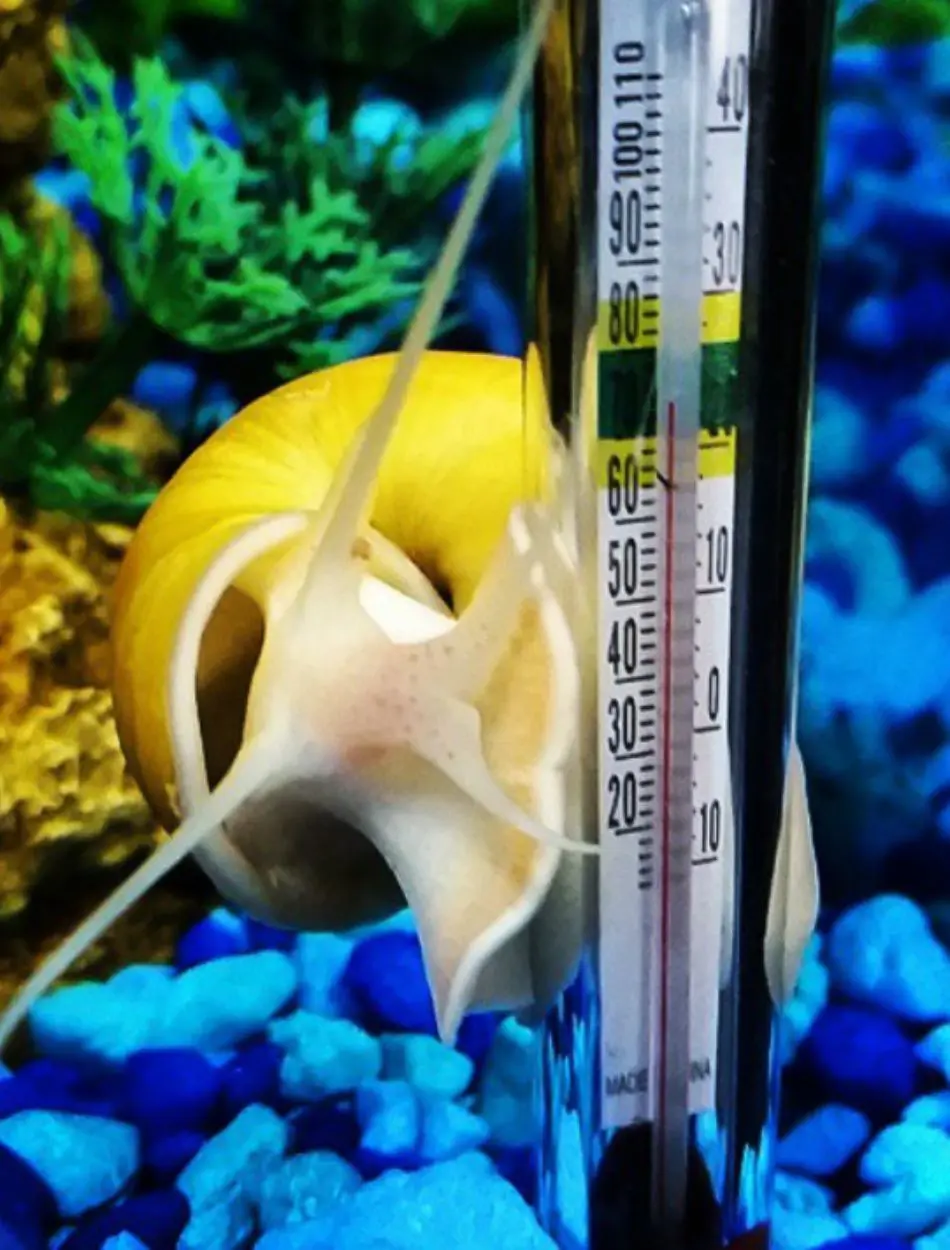
Gold Inca Snail is a deep yellow and gold-colored snail with a creamy white body, head, and foot. It has several orange dots scattered across its head just above and around its mouth. Moreover, they also have orange dashes on their siphon and rings around their eyes.
They can be seen feeding on algae, waste materials, and uneaten food. These snails are receptive to a calcium-rich diet that maintains their shell health. Gold Incas show peaceful and active behavior, so, it is ok to keep them with fish and invertebrates except for snail-eating fish such as certain cichlids or loaches.
15. Zebra Nerite Snail
Zebra Nerite Snails are well known for their beautiful black and yellow striped shells that resemble a zebra's pattern. Their shells are smooth, round, and unique to one another.
Zebra Nerite Snails are fond of algae and feed on various types of algae including tougher types such as green spot algae. They should be kept in well-maintained freshwater aquariums containing hard surfaces like rocks, driftwood, and glass that provide several grazing areas.
These freshwater snails are peaceful and can be kept with several fish and invertebrates, but, they should not be kept with snail-eating fish.
16. Helena Snail
Helena Snail is an eye-catching colonial-shelled freshwater species that is best known for its effective and natural pest control abilities. Their shells have striking yellow and brown bands that give them a unique attractive look.
They feed on their prey such as pond snails and bladder snails with the help of their proboscis. Despite this nature, they are generally peaceful towards other tank inhabitants. They are easy to care for as they do not need special attention but thrive in a clean, stable environment.
You can keep them with a variety of fish and invertebrates but make sure to avoid housing them with other snail species they do not along with.
17. Sulawesi Snail
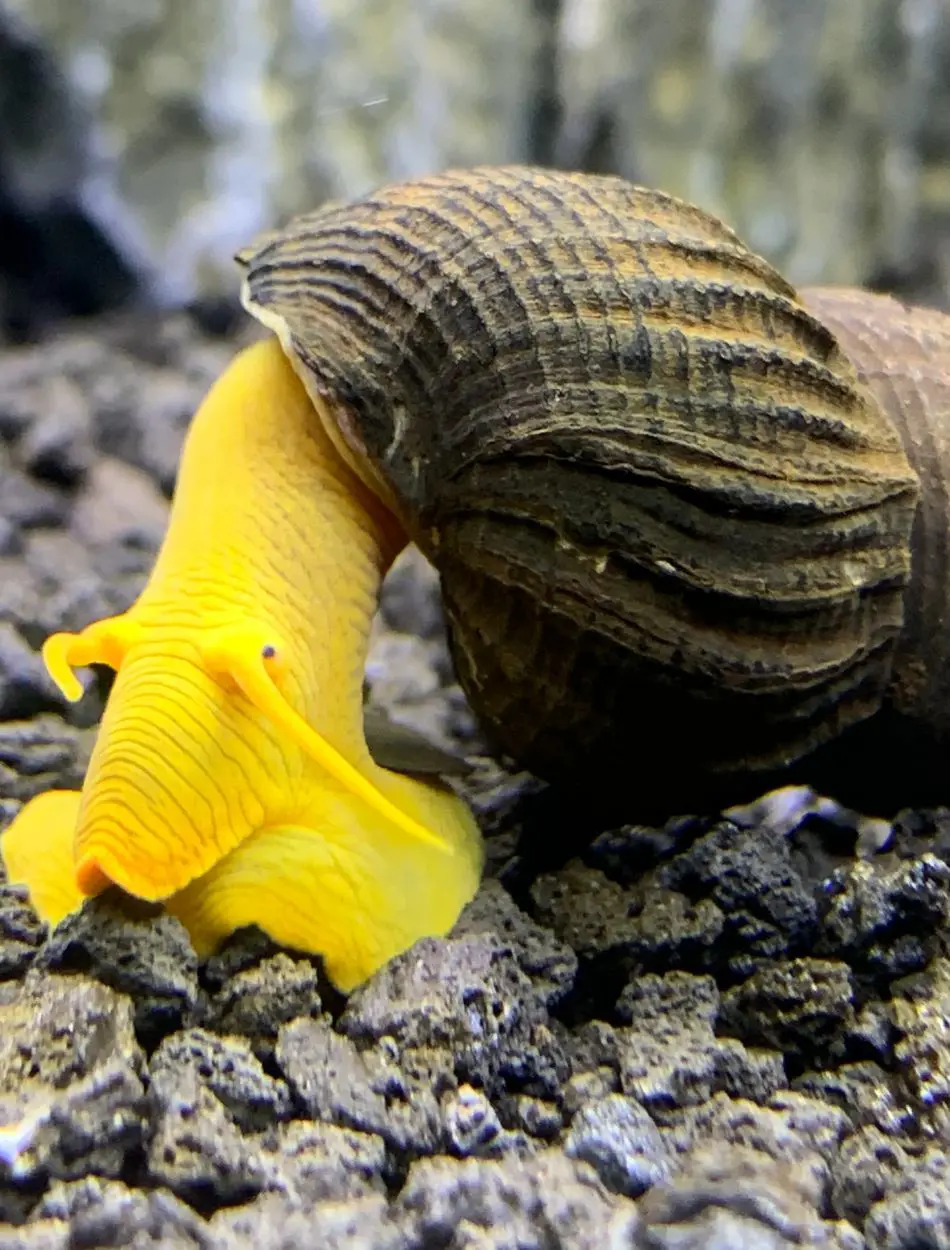
The Sulawesi Snail is a well-known colorful snail species with elongated and pointed shells. Their shells can be of various colors including shades of orange, yellow, black, and brown. Their body color is also graphic, complementing the shell color.
These snails primarily feed on algae, biofilm, residue, and also balanced vegetables such as zucchini and spinach. They show peaceful and calm behavior and can be kept with several non-aggressive fish and invertebrates.
18. Velvet Snail
The Velvet Snail is a smooth, conical-shaped species known for its distinct coloration that ranges from rich purple to dark violet. They are named Velvet Snail as their shell surface has a velvety texture.
These snails are slow-moving creatures that feed on algae and other waste materials. They are easy to care for and require regular water changes and a calcium-rich diet. You can pair them with the most peaceful fish and invertebrates that avoid stress or harm them.
19. Red Racer Snail
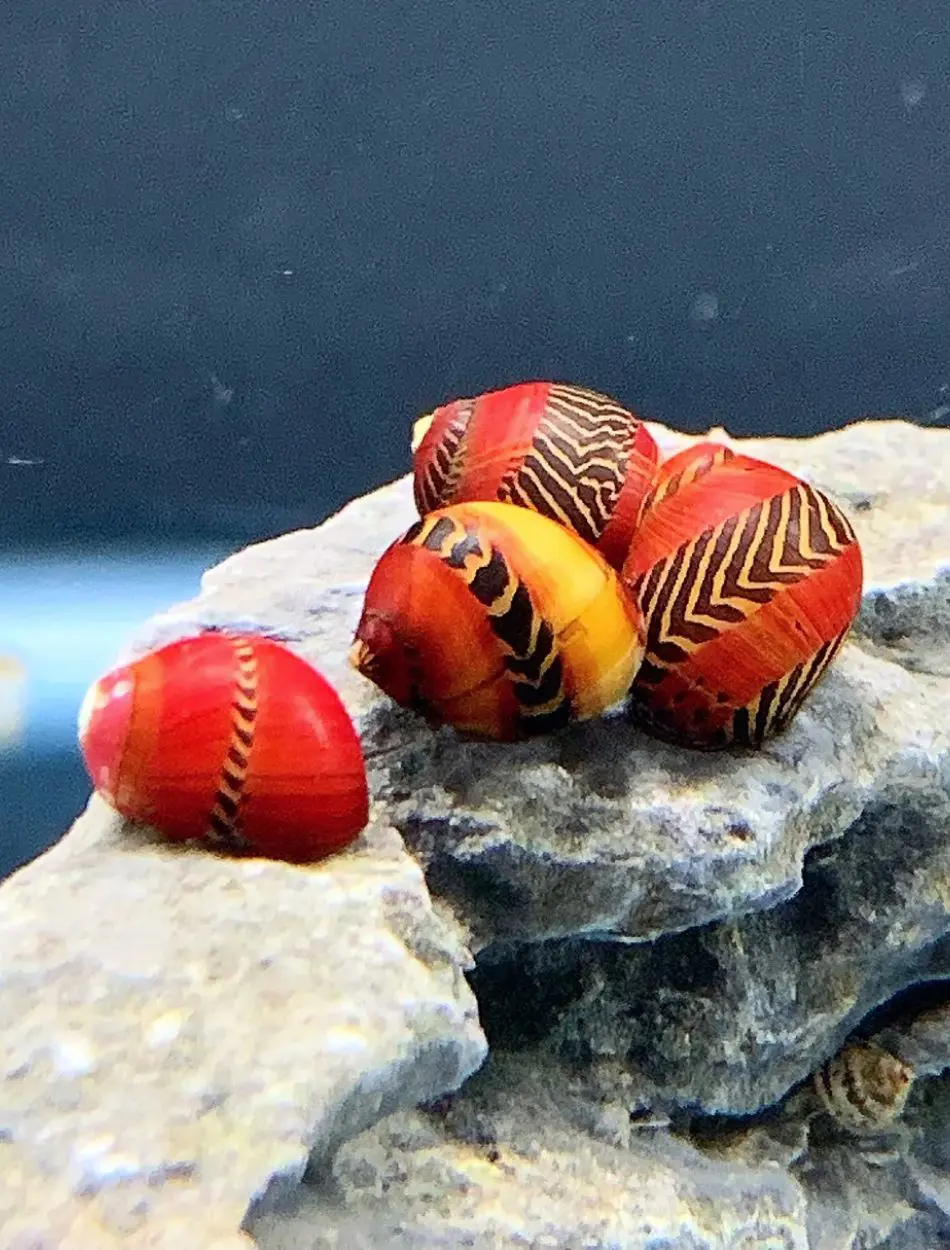
Red Racer is an attractive distinctive featured snail that has a vibrant red color with black or dark-colored bands or spots. Their shells are round, smooth, textured, and comparatively smaller.
They keep the tank clean as they are fond of eating algae and grazing on detritus. Red Racers show peaceful behaviors and are hence compatible with other calm fish and invertebrates. When you add a Red Racer to your tank, make sure the tank is in stable condition and has well-maintained freshwater.
You can also add hiding spots and soft substrates to your tank to help your snail adapt well. Along with algae, they also eat algae wafers and balanced vegetables that help to supplement their diet.
20. Black Devil Snail
The Black Devil Snail is a dark, almost black-shelled tank snail that has subtle patterns or strips on its elongated and pointed shell. These species have a dark body that complements the shell, making them attractive while put in the tank.
They should be kept in well-maintained freshwater tanks with stable water parameters. Make sure to add several hiding spots and substrates to the tank. They feed on algae, waste materials, and other snails as well.
Black Devil Snails pairs well with different fish and invertebrates. However, they should not be paired with aggressive tank mates and other snails they might prey upon. They are best suited in tanks where pest snail population is a concern.