

Making your aquarium dazzle involves careful consideration of the fishes you choose as its inhabitants. Angelfish are among the most popular freshwater fishes because of their beautiful colors and graceful swimming.
They are cichlids native to South America and found in the Amazon River and its tributaries. The classic silver angelfish is the most common one but there is a large variety of Angelfishes based on their colors, fins, and intricate patterns.
These are 15 common types that will surely add beauty to your aquarium.
1. Black Lace Angelfish
Black Lace Angelfish is a popular type of Angelfish featuring a distinctive lace-like pattern set against a deep, velvety black coloration. Their intricate lace pattern adds an ornamental value as it looks like a filigree. Their fins are also black or silver, with white edging.
They are generally mid-to-upper-level swimmers in the aquarium. They appreciate having ample vertical space and tall plants or decorations to explore. Like other angelfish, they can be territorial, especially during breeding, and care should be taken when selecting tankmates to ensure a harmonious community.
2. Blue Angelfish
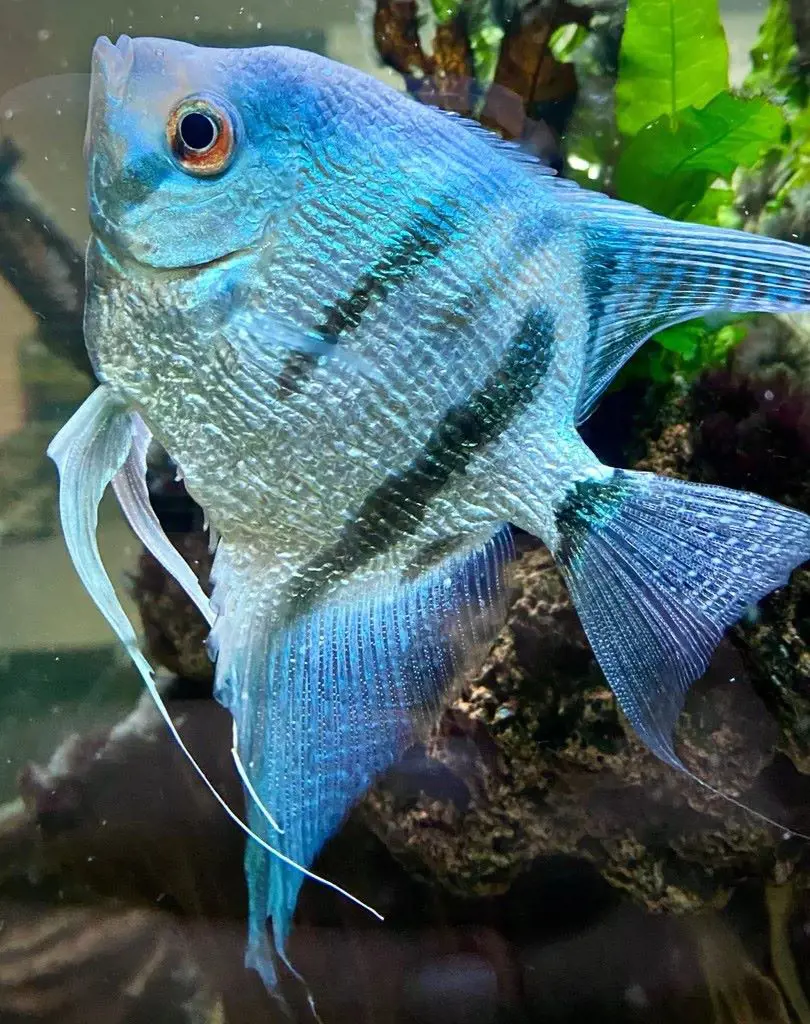
There are two types of Blue Angelfish, one is the marine blue Angelfish Bermuda Blue and the other is the freshwater blue Angelfish called Philippine Blue.
They are the color morph of the classic silver angelfish and are characterized by the vibrant blue body with black markings. The length of Philippine Blue is around 6 inches while the Bermuda blues are over 16 inches long. Both the Bermuda Blue Angelfish and the Philippine Blue Angelfish are popular aquarium fish, and they are both relatively easy to care for.
3. Flame Angelfish
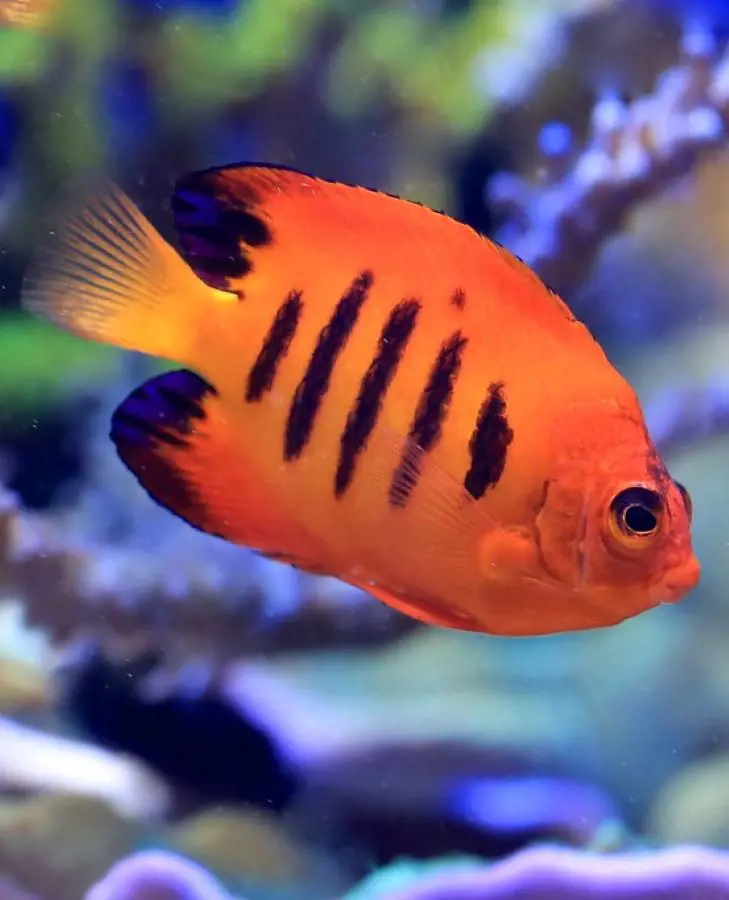
Flame Angelfish is the red angelfish type popular for its bright orange-red coloration with black markings. They are typically 4-5 inches long and have compressed bodies with long, pointed fins.
Their bodies are a bright orange-red color, with four or five black bars on the sides, the posterior part of the dorsal, and anal fins, with alternating short purple-blue and black bands.
They are hermaphroditic, meaning that they can change sex from male to female or vice versa. Flame Angelfish have been successfully bred in a few aquariums but they are generally difficult to breed in captivity as they are marine fishes. They are perfect for saltwater aquariums.
4. Zebra Angelfish
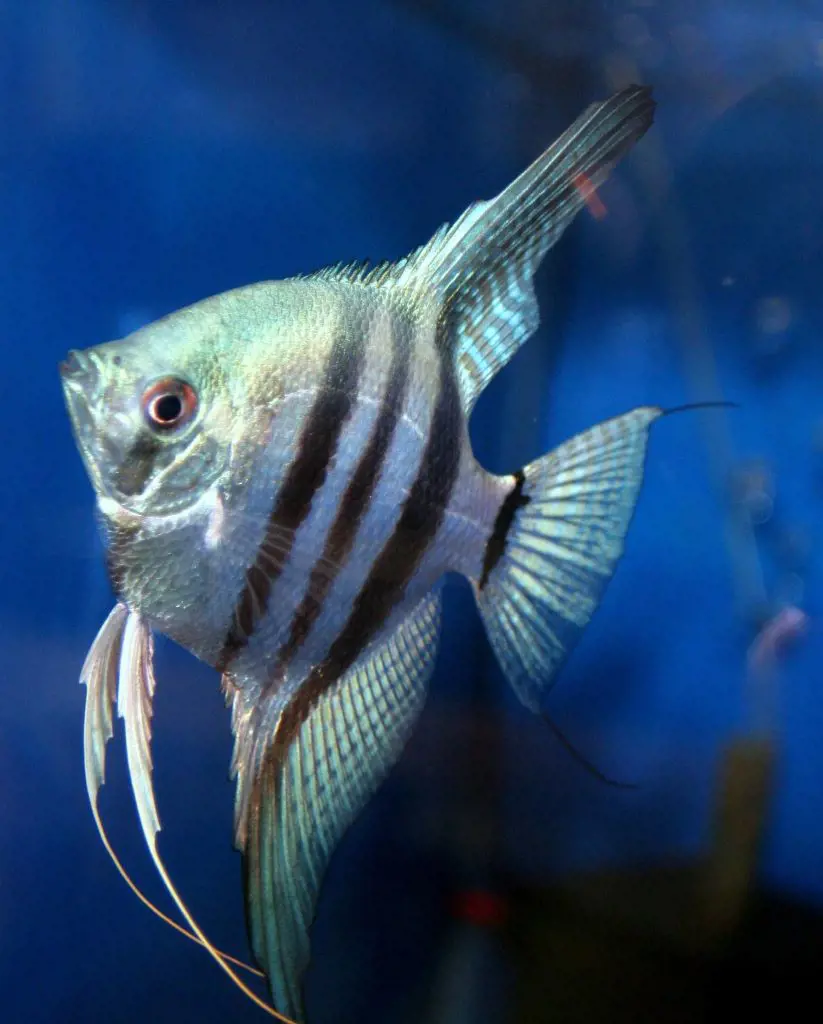
Zebra Angelfish is a freshwater angelfish variety that displays a distinctive zebra-like pattern. These patterns usually consist of bold, vertical black stripes over a silver base color, resembling the stripes seen on a zebra.
As the main base color of their body is silver, they are often called silver angelfish. They are the most common ones and are on demand due to their beautiful appearance and hardy nature.
These classic angelfishes are relatively peaceful but can be territorial during breeding. Still, they are kept in community tanks and thrive in aquarium settings.
5. Albino Angelfish
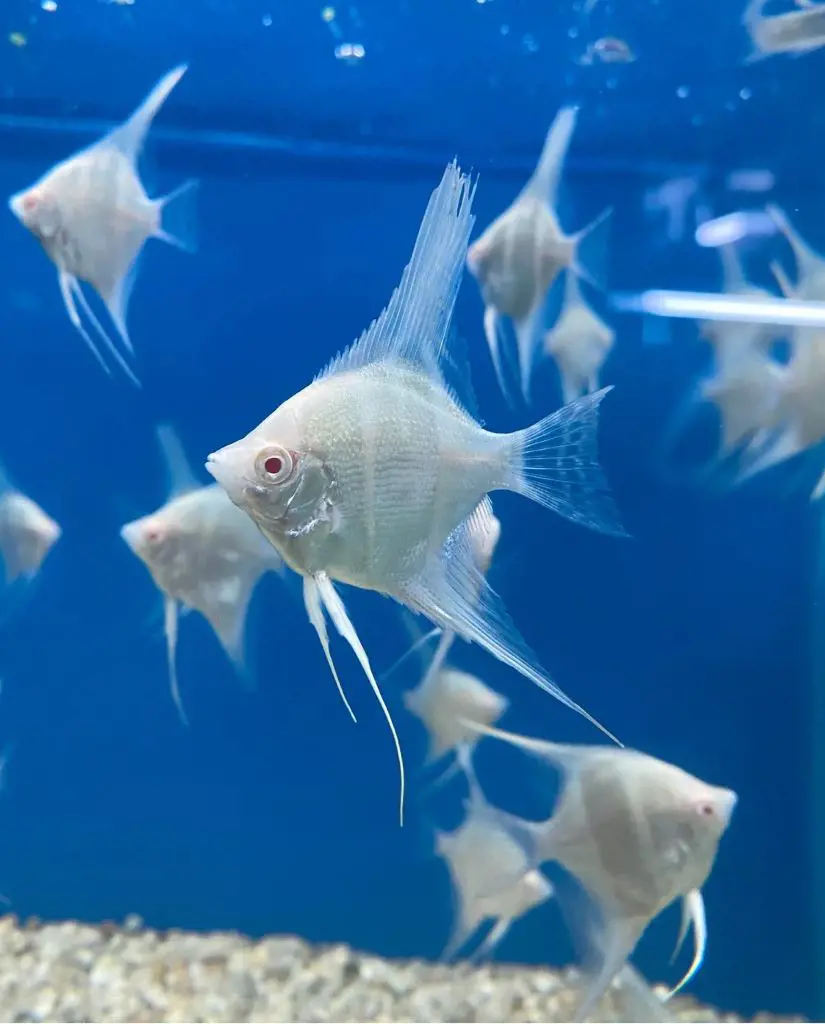
Albino Angelfish are the unique freshwater angelfish popular for their translucent pale white appearance instead of the usual silver or dark coloration. Albino Angelfish lacks the typical pigmentation seen in other angelfish varieties due to their genetic condition.
One of the distinctive features of Albino Angelfish is their red or pink eyes. The lack of pigments in the eye tissues allows the blood vessels to be more visible, giving the eyes a reddish hue.
Like other angelfish, they appreciate well-planted tanks with hiding spots and vertical space, as they are mid-to-upper level swimmers.
6. Koi Angelfish
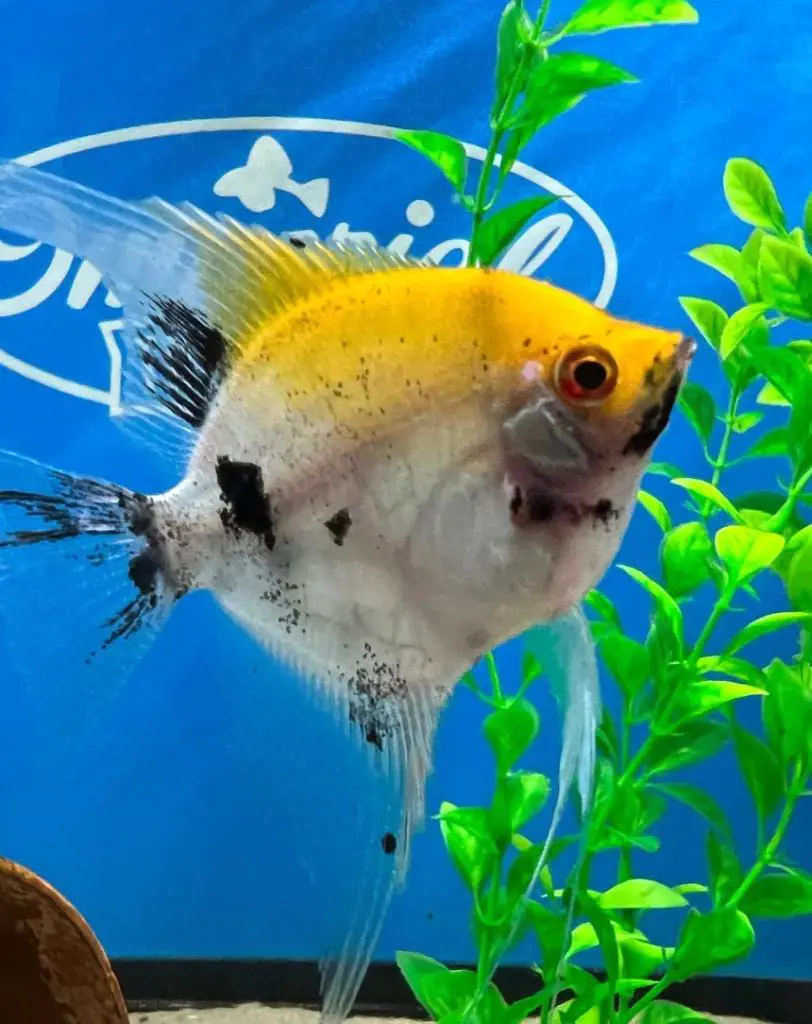
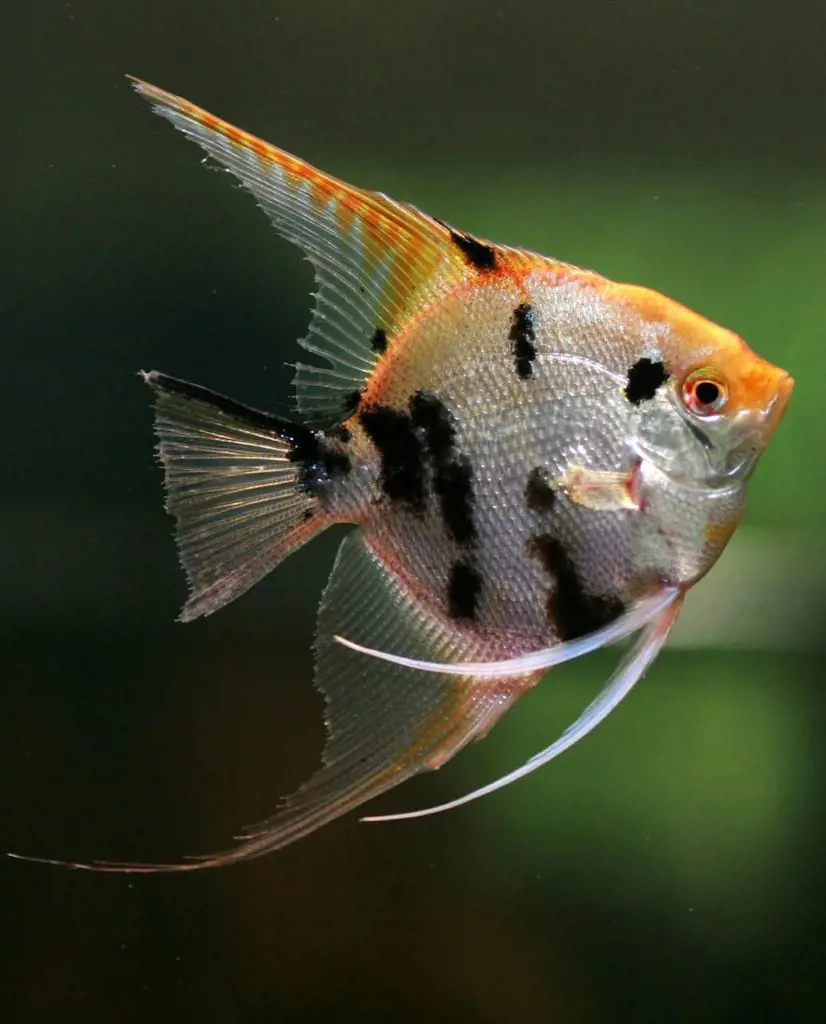
The Koi Angelfish, also known as the Koi Scalare, is a popular freshwater aquarium fish known for its striking coloration and patterns that resembles the Japanese koi carp. It is a color variation of the Silver Angelfish and has a black, white, and gold-orange coloration.
Their varied color patterns, reminiscent of Koi fish, can include combinations of orange, red, yellow, black, and white, creating a stunning and eye-catching appearance.
They are a great choice for beginner aquarists as they are easy to care for. They typically thrive in a large aquarium (at least 30 gallons) with water temperature of 74-86°F and pH of 6.0-7.4.
7. Panda Angelfish
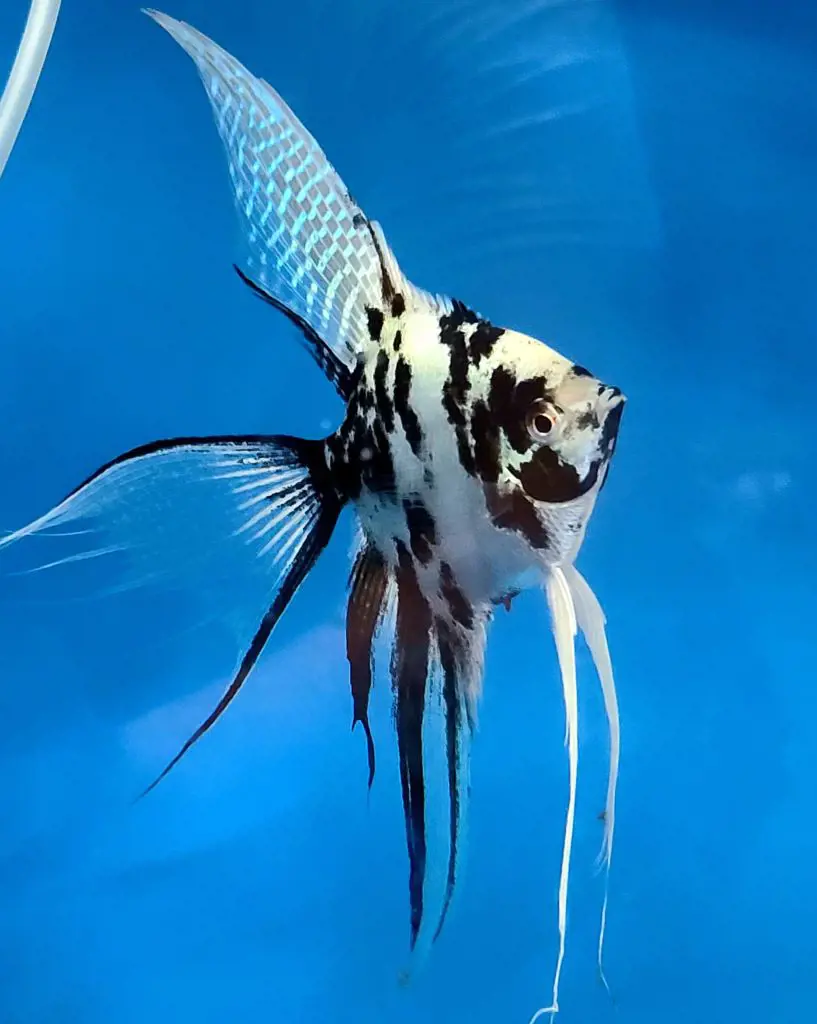
Panda Angelfish are magnificent fishes having deep black coloration with broad and irregular white markings. Panda Angelfish have gained immense popularity among aquarists due to their attractive appearance and relatively peaceful nature compared to some other angelfish species.
They are not a wild species but rather a selectively bred variant of the common Angelfish. A spacious, planted aquarium with plenty of hiding places, such as driftwood and rocks, is ideal for their comfort and well-being. Keeping them in groups of at least five individuals helps distribute aggression as they show territorial behaviour.
8. Leopard Angelfish
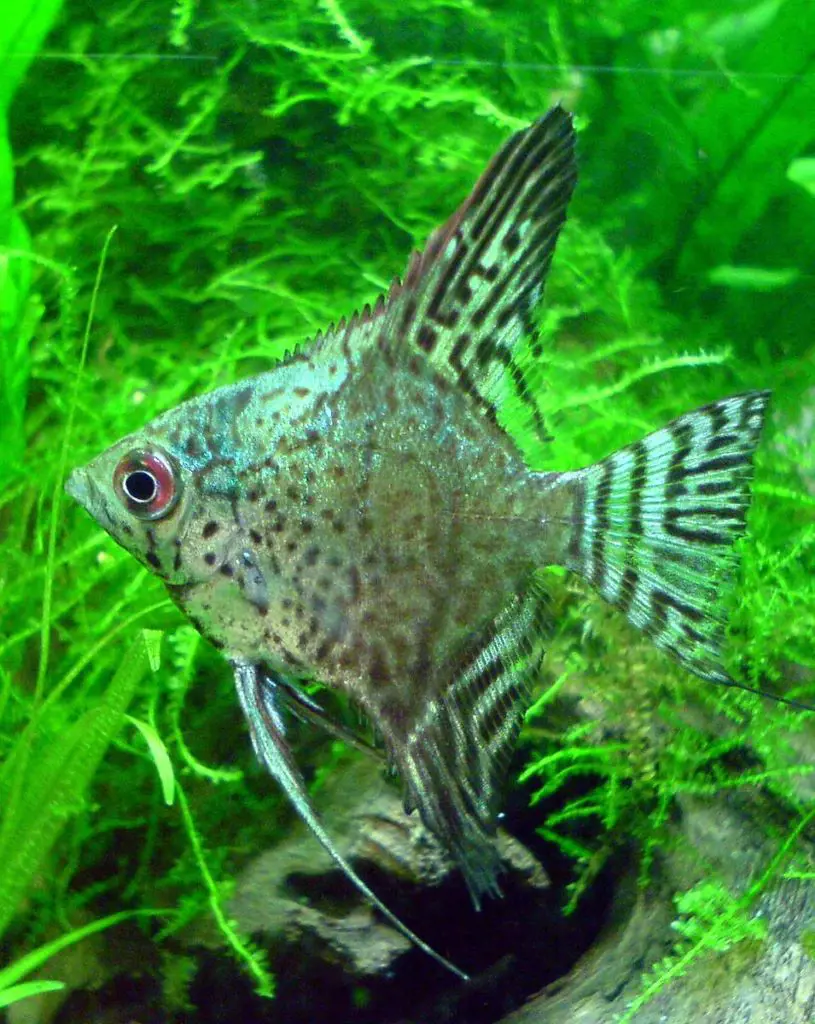
Leopard Angelfish is a popular freshwater aquarium fish known for its striking black and silver marbling pattern. It is a variant of the common Angelfish, selectively bred for its distinct appearance. It has a compressed, laterally flattened body with a pointed dorsal fin and a long, trailing anal fin.
Its body is covered in a bold black and silver pattern, with the black typically forming irregular blotches or marbling across the body and the silver covering the rest of the body.
The fins are also marked with black and silver, and the eyes are black with a white rim. The spots are often dark and may contrast against a lighter background, but the specific coloration can vary. Common colors include silver, black, and white.
9. Marble Angelfish
The Marble Angelfish exhibits a mesmerizing blend of black, white, and gold hues, adorning its laterally flattened body. Its pointed dorsal fin and trailing anal fin accentuate its graceful form.
The body is adorned with irregular marbling patterns, with black patches contrasting against the shimmering white background. A golden crown graces the head, adding a touch of elegance. The fins mirror the body's coloration, further enhancing its visual appeal. Black eyes with white rims complete the picture of this captivating fish.
10. Veil Angelfish
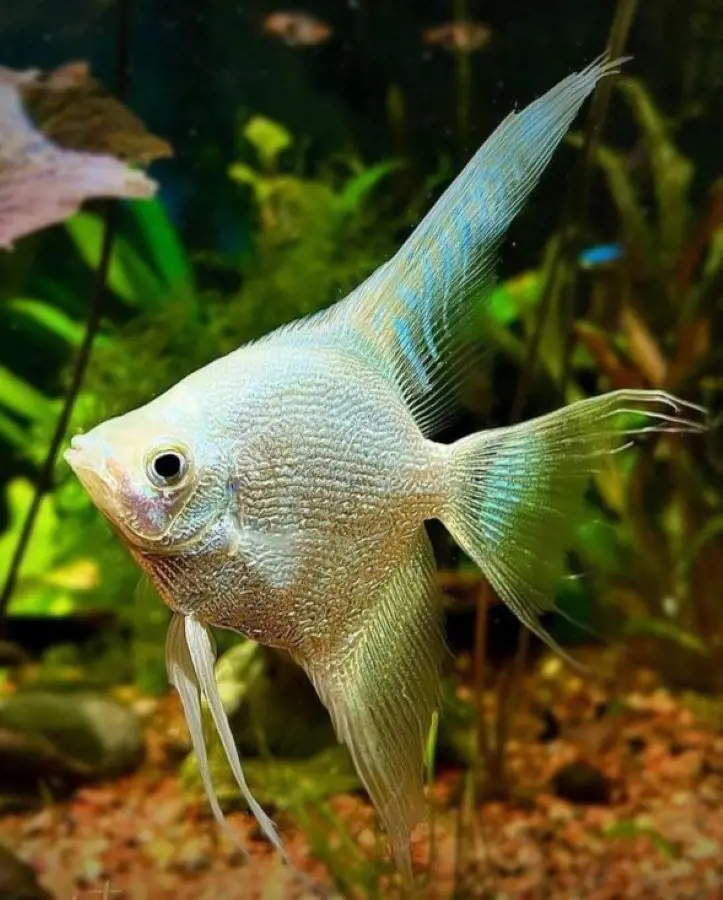
Veil Angelfish are a variety of freshwater angelfish (Pterophyllum scalare) distinguished by their long, flowing fins, creating an elegant and striking appearance. Their long, trailing fins extend beyond the typical length seen in other angelfish varieties, giving them a veil-like appearance.
The unique finnage of Veil Angelfish is a result of selective breeding efforts by aquarium enthusiasts. Veil Angelfish are generally kept in community aquariums, but their long fins can make them more vulnerable to fin-nipping from certain aggressive or fast-moving tankmates. Choosing suitable companions is important to prevent stress and injuries.
11. Gold Angelfish
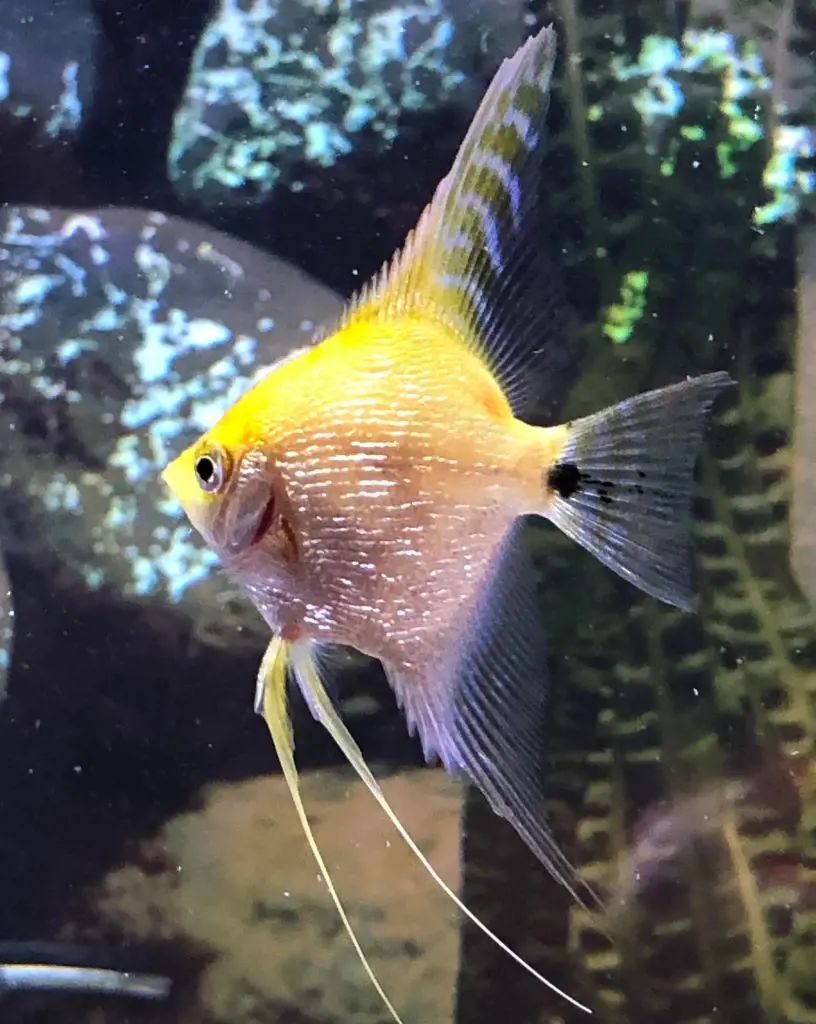
This freshwater angelfish is a selectively bred variant of the common angelfish (Pterophyllum scalare). It is known for its shimmering gold coloration, sometimes with a metallic sheen. Gold Angelfish are relatively easy to care for and can be kept in a community aquarium with other peaceful fish.
While Gold Angelfish share a common gold or yellow coloration, there can be variations in intensity and shade among individuals. Factors such as genetics and environmental conditions can influence the specific coloration of each fish.
12. Platinum Angelfish
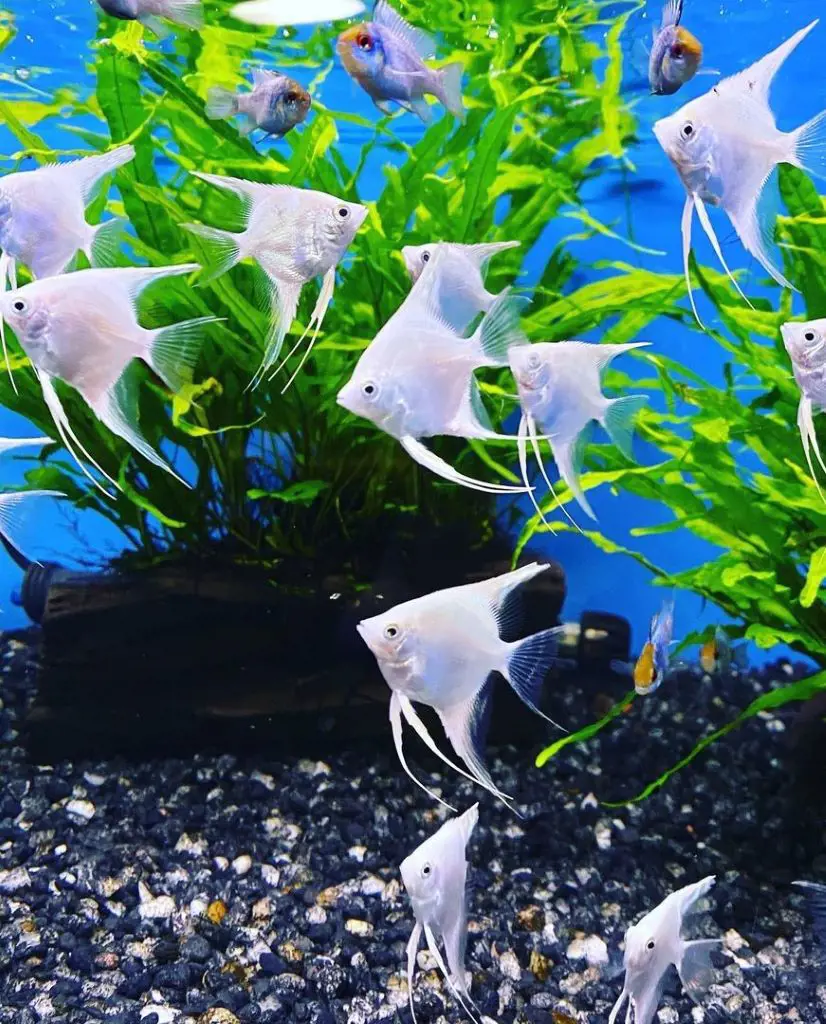
The Platinum Angelfish is a captivating freshwater species admired for its sleek and silvery-white coloration. Bred through selective efforts, these angelfish exhibit a stunning platinum hue that distinguishes them in the aquarium trade.
With a laterally compressed body, elongated fins, and a triangular shape, adult Platinum Angelfish reach sizes of 6 to 8 inches. Their graceful presence adds elegance to community tanks, and they are known for being compatible with peaceful tankmates.
Platinum Angelfish prefer well-planted aquariums with stable water conditions, thriving in mid-to-upper levels. During breeding, they exhibit substrate spawning behavior, laying eggs on flat surfaces.
13. Blushing Angelfish
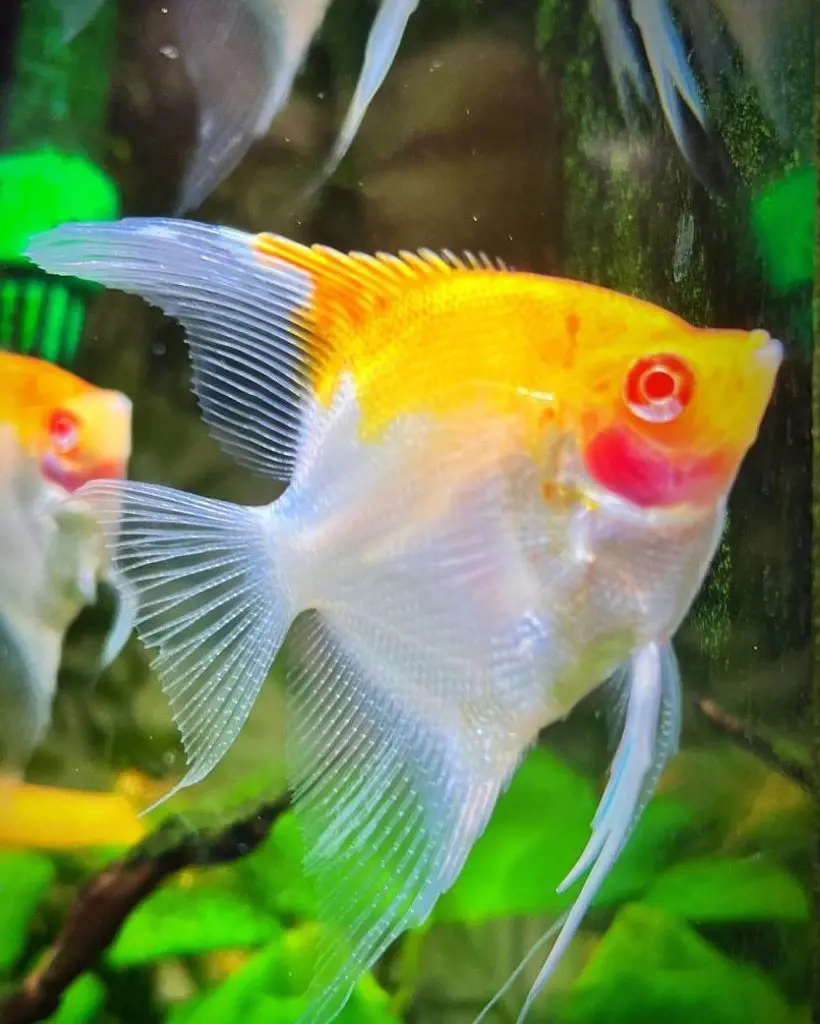
The Blushing Angelfish is a small, vibrant red fish native to the Indo-Pacific region. It has a pinkish red coloration right below the eyes which seems like it is blushing. It is a popular aquarium fish due to its beautiful coloration and relatively peaceful nature. Blushing Angelfish prefers warmer water temperatures and slightly alkaline water.
They are omnivores and eat a variety of foods, including marine fish food, live brine shrimp, and mysis shrimp. With proper care, Blushing Angelfish can live for 8-12 years.
14. Smokey Angelfish
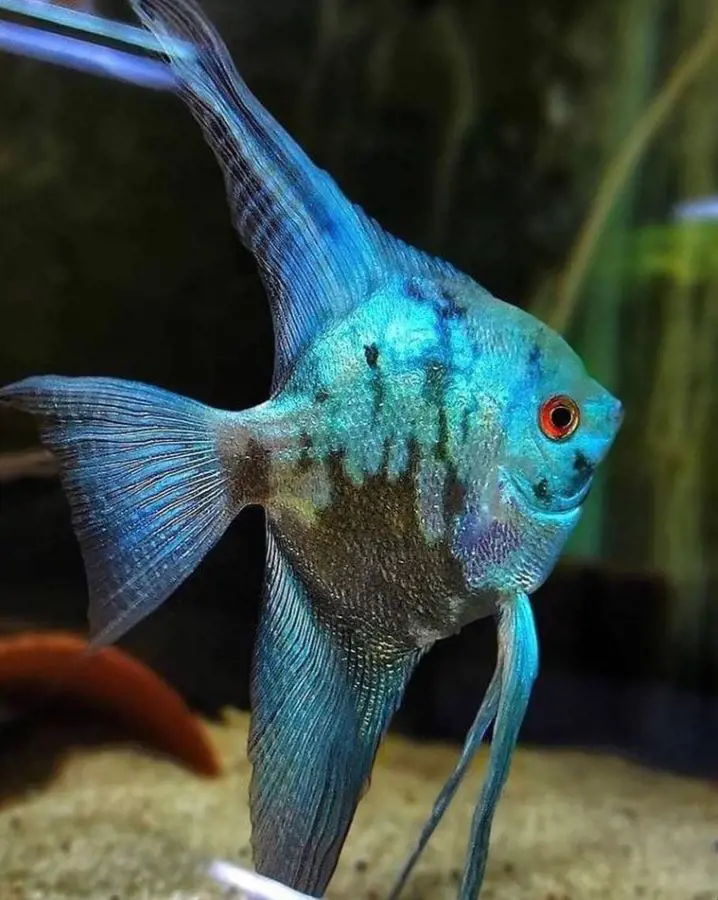
The Smokey Angelfish is a captivating freshwater fish known for its striking grayish-black coloration. These species are found in the warm waters of the Caribbean Sea. Its striking appearance consists of a silvery-gray body adorned with vertical black bars.
With a maximum length of 10 inches, these angelfish are relatively small, but their beauty is undeniable. They thrive in coral reefs, feeding on algae, sponges, and small invertebrates.
Their peaceful nature makes them popular among aquarium enthusiasts, but their care requires attention to water quality and a varied diet. The Smokey Angelfish is a mesmerizing addition to any underwater ecosystem.
15. Dwarf Angelfish
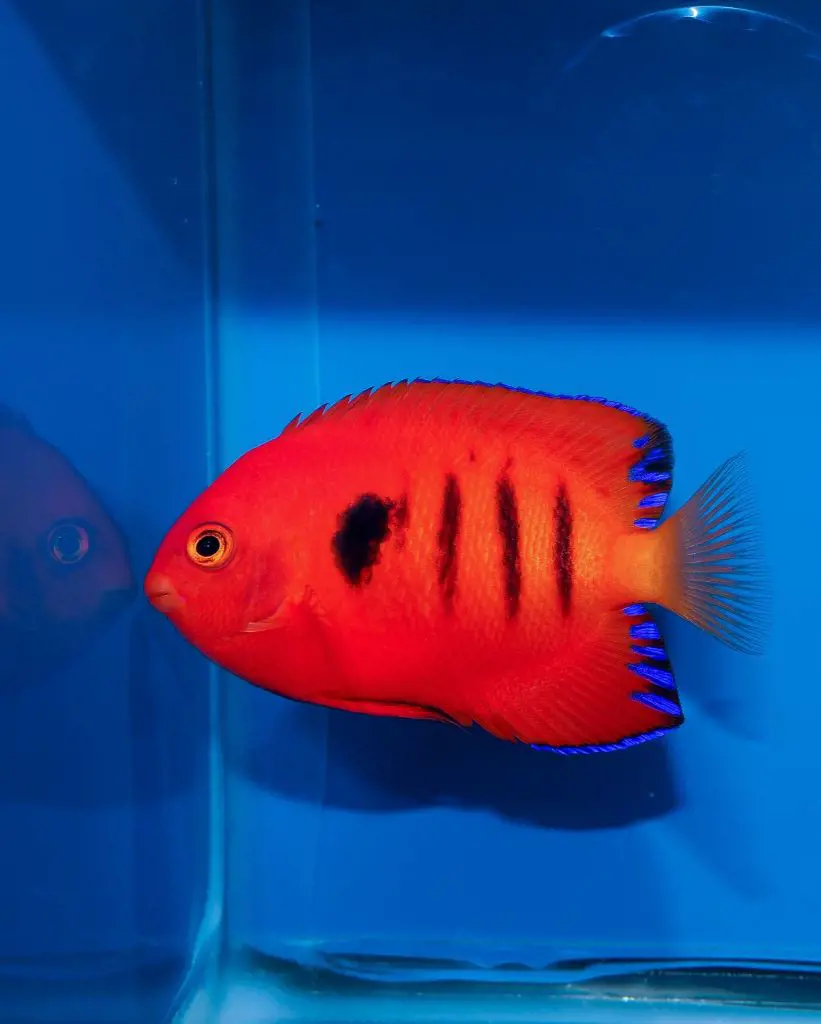
The Dwarf Angelfish is a charming and smaller-sized variant of the classic angelfish, native to Rio Negro in Brazil. There are over 90 different species of Dwarf Angelfish, each with its distinct coloration and patterns.
Growing to around half the size of the common angelfish, these petite beauties exhibit a unique elegance with a laterally compressed body, elongated fins, and a triangular shape. They are known for their striking colors, ranging from bright blues and yellows to deep reds and oranges. Their vibrant coloration often includes iridescent hues.
Dwarf Angelfish are recognized for their adaptability to slightly acidic and soft water conditions, mimicking their natural habitat. Despite their diminutive size, they possess the same grace and intricate finnage as their larger counterparts.